Dumping is when a dump truck is most likely to lose balance. Driver skill matters, but the lifting system matters just as much. A well-designed tipping cylinder helps the bed rise smoothly, release the load more evenly, and improve stability. In this article, you will learn how it makes dump trucks safer during unloading.
Why Dump Trucks Are Most Vulnerable During Tipping
Controlled Lifting Starts With Understanding the Risk
A dump truck is usually stable while traveling because its load sits low in the body and the vehicle’s weight is spread across the chassis and axles. That changes the moment the dump body begins to rise. As the bed lifts, the center of gravity moves upward, which makes the truck more sensitive to lean, uneven ground, and any shift inside the load. The higher the body goes, the smaller the safety margin becomes. Even a slight side slope or soft patch under one wheel can create a dangerous imbalance once the truck is no longer carrying its weight in a low, compact position.
This is why controlled lifting matters so much. The lifting system is not only raising the bed; it is managing a changing balance point. A safe tipping process depends on keeping the truck as level as possible and keeping the center of gravity as low as possible for as long as possible during unloading. The risk rises when three conditions appear together: greater body height, shifting material, and uneven terrain. That combination turns a normal unloading cycle into the point where tip-over accidents are most likely to happen.
Risk factor during tipping | Why it becomes dangerous |
Rising dump body | Lifts the center of gravity and reduces overall stability |
Uneven or soft ground | Allows one side of the truck to sink or lean under changing axle load |
Misalignment between truck and body | Creates uneven force through key structural points during lifting |
Sudden load shift | Moves weight sideways when the body is already elevated |
Load Movement Can Quickly Turn Into a Safety Problem
Not all materials leave the body the same way. Dry, free-flowing loads begin sliding earlier, while moist, sticky, or partially frozen material often needs a steeper angle before it breaks loose. That delay is risky because the truck keeps lifting while the load stays in place, which raises the center of gravity without removing much weight. Once the material finally moves, it may release in a rush instead of in a smooth flow.
Uneven loading makes the situation worse. If material is off-center before tipping starts, the truck is already carrying more weight on one side. During unloading, that imbalance can increase quickly, especially when the operator cannot clearly see how the load is sitting in the body. In real jobsite conditions, dangerous tipping events usually come from several small factors combining at once rather than from one single mistake.
How a Tipping Cylinder Makes Dump Trucks Safer
A Tipping Cylinder Helps Create Smoother Bed Movement
A tipping cylinder improves dump truck safety first by controlling how the body rises, not just whether it rises. In a hydraulic system, pressurized oil enters the cylinder chamber and pushes the piston forward, which extends the rod and lifts the front of the dump body in a steady sequence rather than through a sudden mechanical jerk. Because control valves regulate both fluid direction and flow rate, the operator can raise the bed progressively instead of forcing the body upward all at once. That smoother extension matters because the truck is becoming less stable with every degree of lift, so abrupt motion adds unnecessary shock at exactly the point when the machine can least tolerate it.
The safety value of smooth lifting is closely tied to vehicle balance. When the bed rises in a controlled way, force is transferred more evenly through the mounting points, chassis, and hinge area. That reduces sudden weight transfer and helps the truck stay more composed on the suspension. A jerky lift, by contrast, can create a brief but dangerous disturbance in the truck’s balance, especially if the load is already sitting unevenly or the ground is less than ideal. The tipping cylinder therefore acts as a motion-control component as much as a power source: it limits shock, supports more stable body movement, and lowers the chance that instability will build faster than the operator can react.
Safety function of the tipping cylinder | How it helps during dumping |
Regulated hydraulic extension | Prevents abrupt bed rise and reduces shock loading |
Controlled fluid flow | Keeps lifting speed more predictable for the operator |
High lifting force under pressure | Raises heavy loads without relying on violent mechanical motion |
Stable force transfer through the rod | Supports smoother body rotation around the rear hinge |
Pressure and flow regulation | Helps prevent unstable movements when the bed is elevated |
Controlled Dumping Improves How Material Leaves the Truck
A dump truck does not become safer simply because the body can be raised. It becomes safer when the load starts leaving the body in a more predictable way. Steady cylinder extension gives the material time to respond gradually as the dump angle increases. Instead of a delayed release followed by a sudden mass shift, the load is more likely to begin sliding in stages as gravity takes over. That change is important because one of the biggest tipping risks comes from material breaking loose too late and then moving too quickly once the body is already high. A controlled lift reduces the odds of that abrupt release pattern.
This matters even more when the material is not free-flowing. Moist, sticky, abrasive, or partially compacted loads often require a steeper body angle before they begin to move. If the truck reaches that angle too quickly, the load may shift suddenly and unevenly, increasing side force on the chassis. A well-regulated tipping cylinder does not eliminate that risk on its own, but it gives the operator a more manageable unloading rhythm. In practical terms, predictable dumping helps the truck maintain balance because weight is leaving the body in a more controlled pattern instead of in one violent shift.
A few operating advantages follow from controlled dumping:
● The operator has more time to detect unusual body movement before it becomes dangerous.
● The load is less likely to break loose as one compact mass after a long delay.
● Weight leaves the truck more progressively, which helps avoid sudden side instability.
Telescopic Tipping Cylinder Design Supports Safe Dumping Angles
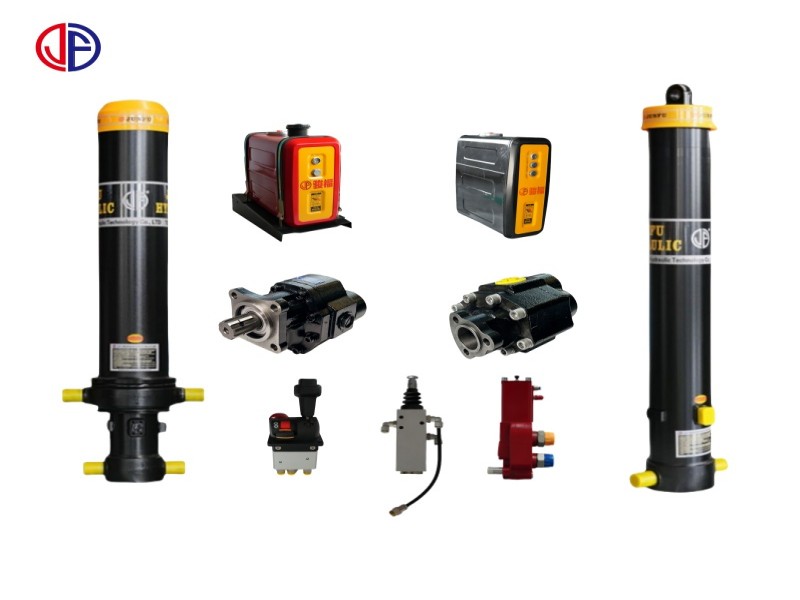
For many dump trucks, a telescopic tipping cylinder offers the safest practical way to achieve the lift needed for unloading. Telescopic cylinders use multiple nested stages that extend one after another, allowing the system to produce a long stroke while staying compact when fully retracted. That matters because dump trucks need substantial lift travel, but the installation space under the body is limited. A telescopic design solves that packaging problem without forcing a bulky layout that would compromise vehicle geometry or reduce usable space.
The design also supports safer dumping because proper unloading depends on reaching the right body angle. If the angle is too low, sticky or high-friction material may remain lodged in the body, tempting operators to keep raising, jolting, or repositioning the truck. If the cylinder is designed to deliver the required stroke efficiently, the body can reach an angle high enough for gravity to discharge the load without relying on unsafe improvisation. That combination of compactness, long extension, and practical lift height is why telescopic tipping cylinders are central to safer dump truck operation in real working conditions.
What Else Affects Safety Besides the Tipping Cylinder
Ground Conditions Still Determine Whether Tipping Stays Stable
A tipping cylinder can lift the body smoothly, but it cannot create stability on unsuitable ground. During dumping, axle loads change quickly, and the supporting surface has to carry that extra force without allowing one side of the truck to sink, lean, or twist. That is why a surface that merely looks flat is not always safe. If the ground is soft, wet, loose, or slightly sloped, the truck can begin to tilt even when the hydraulic system is working exactly as intended.
Stable tipping depends not only on the surface itself, but on the entire support chain beneath the raised body, including the chassis, suspension, tires, hinges, and cylinder mounting points. When any of these elements are worn, damaged, or misaligned, the truck becomes more vulnerable during the lift.
Site condition | Safety impact during tipping |
Soft or wet ground | One side of the truck may sink as axle load rises |
Side slope | Increases lean while the center of gravity is moving upward |
Poor truck-trailer alignment | Creates uneven force at critical hinge and cylinder points |
Worn suspension or tire issues | Reduces the truck’s ability to stay level under load |
This is why stable positioning matters before the body is raised. Straight wheel alignment, proper truck-to-body alignment, and a solid dumping surface all help the tipping cylinder do its job safely. Without those conditions, the hydraulic system may still perform smoothly, but the truck itself may no longer be stable enough to unload safely. Poor site conditions also increase cylinder stress during dumping, which means bad ground affects both rollover risk and system strain.
Load Distribution Can Reduce the Safety Benefit of the Cylinder
Load distribution is the second major factor the tipping cylinder cannot fully overcome. If material is loaded off-center, the center of gravity shifts toward one side before dumping even begins. As the body rises, that imbalance becomes more serious because the elevated load applies uneven force through the chassis and lifting points.
Poor loading practice often starts long before tipping. Common warning situations include side loading, limited visibility into the body during loading, and closing the cover without checking whether the material is spread evenly. In those cases, the tipping cylinder may still provide controlled extension, but controlled extension alone cannot neutralize a badly placed load. The cylinder improves safety by managing motion, yet safe dumping still depends on a centered load that allows weight to leave the body in a balanced way.
Choosing and Maintaining a Tipping Cylinder for Safer Operation
The Right Tipping Cylinder Must Match the Truck and the Job
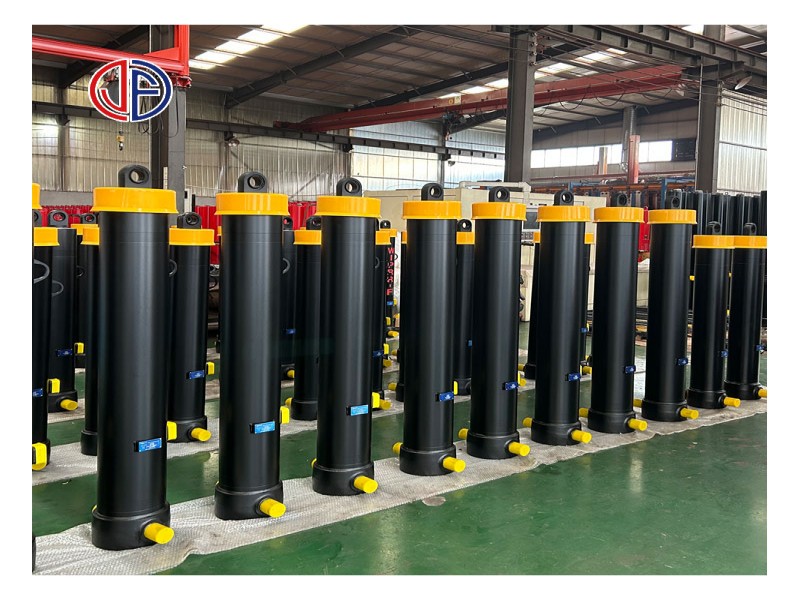
A safer dump truck starts with a tipping cylinder that matches the vehicle’s real working demands. Cylinder capacity has to be sufficient for maximum payload weight, while stroke length must be long enough to achieve the dumping angle required for the material being carried. Mounting setup matters just as much, because the cylinder does not work in isolation: it transfers force through the chassis, body, and hinge points.
Engineers choose configurations based on load distribution, bed length, lifting angle, and overall vehicle stability, which shows that cylinder selection is really a balance between lifting force and controlled geometry rather than a simple size decision.
Selection factor | Why it matters for safer operation |
Lifting capacity | Must handle maximum payload without overloading the hydraulic system |
Stroke length | Must reach the dump angle needed for proper unloading |
Mounting configuration | Affects force transfer, lifting balance, and chassis stress |
Truck and bed layout | Determines whether the cylinder fits the vehicle’s actual geometry |
A poor match can create problems even before a visible failure appears. If capacity is too low, the system may struggle under load. If stroke is poorly matched, the body may not tip efficiently. If positioning is wrong, lifting force may be applied unevenly, increasing structural stress and making bed movement less stable.
Regular Inspection Helps Prevent Unsafe Failure
Routine inspection is what keeps a correctly chosen tipping cylinder safe over time. Regular checks should cover hydraulic hoses, fluid levels, piston rods, and cylinder seals, while clean hydraulic oil remains important for reducing internal wear and maintaining reliable response. These inspections matter because many dangerous failures begin as small hydraulic losses rather than sudden breakdowns.
Operators should pay attention to warning signs such as jerky lifting, slow extension, visible leaks, and unusual body movement during unloading. Those symptoms often point to pressure loss, worn seals, contamination, or weakening system components. Checking mounting points and rod condition before use also helps catch developing problems before they affect bed stability under load.
Conclusion
A tipping cylinder makes dump trucks safer through smooth, controlled, and predictable dumping motion. Real safety also depends on proper loading, firm ground, and regular maintenance. Shandong junfu hydraulic technology Co.,Ltd. provides tipping cylinder solutions designed for stable lifting, reliable performance, and practical value in demanding dump truck operations.
FAQ
Q: How does a tipping cylinder improve dump truck safety?
A: A tipping cylinder improves safety by raising the body smoothly, reducing shock, load shift, and rollover risk.
Q: Can a tipping cylinder prevent all tipping accidents?
A: No. A tipping cylinder improves control, but unsafe ground, poor loading, and weak maintenance still create risk.
Q: Why does dump angle matter in unloading safety?
A: The right tipping cylinder helps achieve a safe dump angle, allowing material to discharge without sudden release.
Q: What should buyers check when selecting a tipping cylinder?
A: Buyers should match the tipping cylinder to payload, stroke length, mounting geometry, and dump body design.


