Smooth unloading can decide how fast a trailer returns to work. A reliable tipping cylinder makes lifting and discharge more controlled, efficient, and safe. In this article, you will learn how it improves trailer performance, what affects smooth operation, and what supports reliable long-term use.
How a Tipping Cylinder Keeps Trailer Movement Smooth
Controlled Lifting Instead of Sudden Bed Movement
A tipping cylinder keeps trailer motion predictable by converting hydraulic pressure into steady linear force rather than a sudden mechanical shove. As pressure builds, the cylinder extends in a controlled sequence and raises the trailer body at a manageable pace. That matters because unloading is not just about getting the bed up; it is about keeping the lift balanced from the first movement to the full tipping angle. When the motion is smooth, the operator can judge the load more accurately, respond to shifting material earlier, and avoid the abrupt bed jump that often increases stress on both the trailer and the hydraulic system.
Controlled lifting also improves handling at the operator level. Instead of reacting to unpredictable movement, the driver can adjust the tipping process with more confidence, especially when working near stockpiles, bins, or tight unloading zones. This is one reason tipping cylinders are so important in real-world trailer operations: they turn lifting into a guided process rather than a rough release of force.
Smooth lifting factor | Operational effect |
Steady hydraulic extension | Reduces sudden bed movement during lift-off |
Controlled tipping angle | Helps the operator place material more accurately |
Even force distribution | Lowers localized stress on the trailer frame |
Predictable lowering behavior | Improves safety when the bed returns to position |
Better Material Discharge During Unloading
Smooth lifting has a direct effect on how material leaves the trailer. When the trailer bed rises in a consistent motion, the load starts to move progressively instead of breaking loose all at once. That creates a cleaner discharge pattern and helps more of the material leave the body without repeated jolts or manual intervention. For operators moving gravel, sand, soil, grain, or mixed debris, this is a practical advantage rather than a technical detail.
This becomes even more important with loads that do not flow evenly. Wet aggregate, compacted soil, or unevenly distributed material can shift unpredictably if the bed rises too quickly. A well-performing tipping cylinder gives the operator better control over lift speed and angle, which helps the load release more gradually. In many trailer applications, telescopic cylinder designs are especially useful because they combine high lift capability with stable, progressive extension in a compact space.
Why Smooth Operation Matters in Daily Work
In daily operations, smooth tipping saves time in ways that are easy to measure on site. A trailer that unloads cleanly spends less time paused halfway through discharge, needs fewer corrective movements, and is more likely to complete the cycle without extra labor. That supports faster turnaround, especially in jobs with repeated loading and dumping throughout the day.
Smooth operation also makes trailer performance more predictable. Operators can work with greater consistency across different materials and jobsite conditions, which reduces interruptions and lowers the chance of avoidable wear caused by jerky movement or uneven force. The result is not only a quicker unload, but a more dependable workflow from trip to trip.
What Makes a Tipping Cylinder Effective in Trailer Applications
Sufficient Lifting Force with Stable Extension
An effective tipping cylinder does more than generate raw lifting power. In trailer applications, performance depends on whether that force is delivered in a controlled, balanced way throughout the entire lift. A cylinder may be strong enough to raise a loaded body, but if extension becomes uneven or unstable as the bed rises, unloading can become less predictable and more stressful for both the operator and the trailer structure. The most effective systems combine lifting force with consistent extension so the trailer body moves progressively rather than surging upward under pressure. That balance is especially important when the load is heavy, unevenly packed, or slow to break free.
Stable extension also matters because the mechanical demands change during the lift. As the trailer body rises, the angle shifts, the leverage changes, and the load may begin to move toward the rear. A well-matched tipping cylinder must keep working effectively through those changes without losing control. This is why front-mounted layouts and well-positioned pivot points matter: they help the cylinder use hydraulic force more efficiently and maintain better stability under load. When the cylinder extends smoothly through each stage of movement, the trailer is less likely to experience abrupt frame stress, sudden load shifts, or inconsistent dumping behavior.
Telescopic Design and Space Efficiency
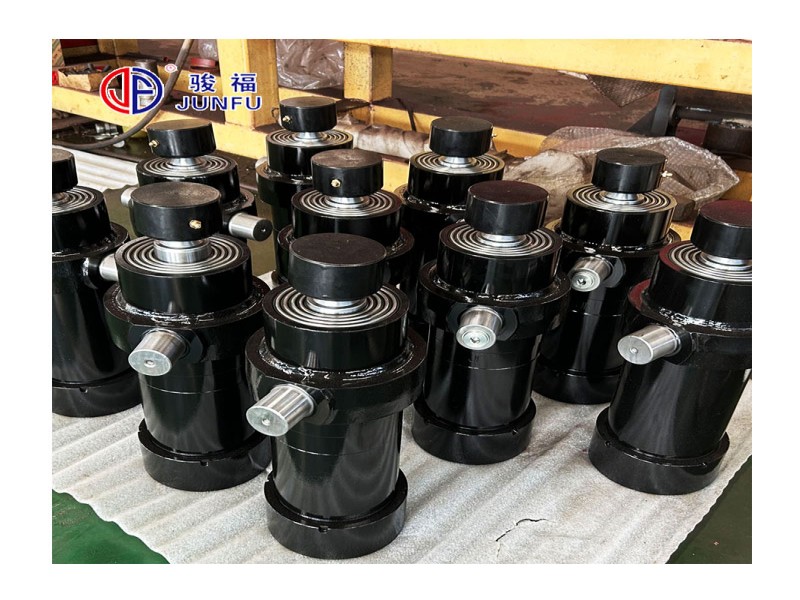
For many trailers, the most practical solution is a telescopic tipping cylinder. Its effectiveness comes from the ability to deliver a long stroke while remaining compact when fully retracted. That matters because dump trailers usually need significant lift height to achieve reliable material discharge, but they do not have unlimited installation space under the body. A single-stage cylinder long enough to create the same lift would take up too much room and interfere with trailer design. By using multiple nested stages, a telescopic cylinder provides the needed extension without forcing the trailer into a bulkier profile.
This space-saving design supports trailer efficiency in several ways. It helps maintain a lower transport height, preserves usable body geometry, and allows the trailer to achieve steep dump angles that support more complete unloading. Telescopic cylinders can reach high tipping angles while distributing lifting forces more evenly across the main frame. That combination of long reach and compact packaging is a major reason telescopic cylinders have become a standard choice for high-capacity trailer applications.
Selection factor | Why it affects cylinder effectiveness |
Load weight | Determines the lifting force required to raise the trailer body safely |
Dump angle | Influences how much stroke and extension range the cylinder must provide |
Trailer geometry | Affects mounting position, leverage, and extension efficiency |
Operating conditions | Impacts the need for extra control on uneven ground or in heavy-duty use |
Matching the Cylinder to Trailer Demands
Choosing the right tipping cylinder depends on how the trailer actually works in the field. Load weight is the first decision point because the cylinder must raise the body and payload together without overloading the hydraulic system. Dump angle comes next, since a trailer that needs steeper discharge for sticky or dense material requires enough stroke to reach that angle consistently. Trailer geometry is equally important, because bed length, pivot position, and available mounting space all affect how efficiently the cylinder can convert hydraulic force into lifting motion. A mismatch here can reduce lifting performance even when the cylinder itself looks powerful on paper.
Operating conditions should also shape the decision. Trailers working on uneven terrain, in frequent-cycle construction jobs, or with variable loads often need more than a basic lift function. In those cases, better control, stronger stability, and durable multi-stage extension become more valuable than simple cost savings. Practical selection usually comes down to three questions:
● How heavy and uneven are the loads in normal use?
● How much lift angle is needed for full discharge?
● How much installation space is available without compromising trailer design?
Common Tipping Cylinder Issues That Disrupt Trailer Operations
Signs That Operation Is No Longer Smooth
Most tipping cylinder problems show up first as changes in movement quality rather than a total lifting failure. A trailer bed that rises more slowly than usual, hesitates during extension, or moves in a stop-and-start pattern is already signaling that the hydraulic system is under strain. Leakage around seals, rod damage, and unstable lowering behavior are practical warning signs that should not be ignored, because these issues often develop before a full breakdown occurs. Dirty rods, worn seals, and poor fluid condition are often linked with erratic lifting and fluid loss in trailer hydraulic systems.
Another common symptom is incomplete tipping. The trailer may lift, but not reach the angle needed for clean discharge, leaving part of the load stuck in the body. In working conditions, that usually means more manual clearing, longer unloading time, and greater stress on the operator. Jerky motion can be just as disruptive, especially when handling uneven or sticky material, because it reduces control over the dumping process and increases the chance of load shift. Soft or spongy movement often points to air in the system rather than a simple lack of force.
Symptom | What it often suggests |
Slow lifting | Low fluid level, weak pump, or internal wear |
Jerky motion | Air in the system or contaminated hydraulic oil |
External leakage | Worn seals, damaged hoses, or rod-related seal damage |
Uneven lowering | Valve issues or inconsistent hydraulic control |
Incomplete tipping | Insufficient stroke, pressure loss, or system inefficiency |
What Usually Causes These Problems
In most trailer applications, the root causes are not especially complicated, but they worsen quickly when left unchecked. Worn seals are one of the most common issues because once sealing performance drops, fluid escapes, pressure becomes less stable, and lifting quality declines. Contaminated hydraulic fluid is another major cause. When oil carries debris or has degraded over time, system efficiency drops and moving parts experience more internal wear. Low fluid level can also trigger overheating, erratic movement, and poor lifting performance.
A few causes deserve regular attention because they often work together:
● Air trapped in the hydraulic system can make cylinder action feel soft or uneven.
● Rod corrosion or surface damage can destroy seals and lead to repeated leakage.
● Weak pump output or faulty valve response can cause inconsistent extension or failure to lift.
These are not isolated faults; they directly affect how smoothly the tipping cylinder performs under load.
How to Maintain Reliable Trailer Performance Over Time
Routine Maintenance That Prevents Bigger Failures
Reliable trailer performance depends on maintenance habits that catch small hydraulic issues before they turn into expensive downtime. A tipping cylinder may still operate when early wear begins, but that does not mean the system is healthy. In practice, smooth trailer operation is preserved through regular inspection, clean hydraulic fluid, and attention to the rod and seal area, where many problems first appear. Weekly visual inspections for fluid leaks, rod pitting, and seal wear are useful, along with rod cleaning after use in muddy or dusty conditions to prevent contaminants from damaging internal seals during retraction. It is also important to maintain clean hydraulic oil and remove trapped air to avoid spongy or jerky movement.
A useful maintenance routine does not need to be complex, but it does need to be consistent. Operators should check for visible leaks around seals, hoses, and fittings, confirm that hydraulic fluid remains at the recommended level, and watch for signs of overheating or erratic lifting. Low or degraded fluid can reduce system efficiency and contribute to poor lifting performance, while dirt on the rod can shorten seal life and lead to recurring leakage. Rust or corrosion on the rod should be cleaned early, and severe damage may require replacement before it affects the rest of the system.
Maintenance task | Why it matters for trailer performance |
Visual inspection for leaks and seal wear | Helps detect pressure loss before lifting performance drops |
Hydraulic fluid level and quality check | Prevents overheating, erratic motion, and reduced system efficiency |
Rod cleaning after dirty jobs | Stops debris from damaging seals during retraction |
Rust or pitting inspection on the rod | Reduces the risk of seal failure and repeated leakage |
Pump and valve check | Helps maintain steady pressure and consistent tipping response |
Beyond the cylinder itself, maintenance should include the hydraulic pump, valves, and hose routing. If the pump output weakens or valve response becomes inconsistent, the trailer may lift unevenly or fail to reach full tipping height. Hoses also deserve attention because rubbing, cracking, or heat exposure can create leaks under load. These are not isolated maintenance details; they directly affect how steadily the cylinder can raise and lower the trailer body in real working conditions.
Why Maintenance Protects Both Efficiency and Trailer Lifespan
Proper upkeep protects efficiency because smooth tipping depends on predictable hydraulic response. When fluid is clean, seals remain intact, and the rod surface stays free of debris or corrosion, the cylinder can extend and retract with less resistance and better control. That reduces interruptions during unloading and lowers the chance of incomplete discharge, repeated lift attempts, or unplanned service stops. Clean oil and proper bleeding help prevent jerky movement, which matters not only for operator control but for overall cycle consistency.
Maintenance also protects the trailer structure itself. Stable hydraulic action helps distribute lifting forces more evenly across the frame, reducing localized stress and the risk of structural fatigue over time. When maintenance is neglected and motion becomes uneven, that benefit starts to weaken. Jerky extension, leakage, or unstable lowering can place unnecessary strain on the trailer body, mounting points, and main frame. Keeping the tipping cylinder in good condition therefore supports both short-term productivity and the long-term durability of the trailer under repeated load cycles.
Conclusion
A quality tipping cylinder improves trailer control, unloading speed, and long-term reliability. The best results come from correct selection and regular maintenance. With durable hydraulic solutions and dependable service from Shandong junfu hydraulic technology Co.,Ltd., trailer operations can become safer, smoother, and more efficient.
FAQ
Q: What does a tipping cylinder do in a trailer?
A: A tipping cylinder lifts the trailer body to unload bulk material in a controlled way.
Q: How do you choose the right tipping cylinder?
A: The right tipping cylinder depends on load weight, dump angle, trailer geometry, and duty cycle.
Q: Why is a telescopic tipping cylinder often used?
A: A telescopic tipping cylinder provides long stroke in limited mounting space for higher dump angles.
Q: What causes tipping cylinder performance problems?
A: Tipping cylinder issues often result from worn seals, contaminated fluid, trapped air, or rod damage.


