- All
- Product Name
- Product Keyword
- Product Model
- Product Summary
- Product Description
- Multi Field Search


Views: 0 Author: Site Editor Publish Time: 2026-03-31 Origin: Site


What makes a heavy-duty trailer unload smoothly instead of dangerously? The answer often comes down to the tipping cylinder and how it turns hydraulic pressure into controlled lifting force. In this article, you will learn how it works, what affects performance, and which maintenance points matter most in real trailer use.
A tipping cylinder works by turning hydraulic pressure into straight-line force that raises the front of the trailer body. When the operator activates the hydraulic system, the pump sends pressurized oil from the reservoir through hoses and control valves into the cylinder chamber. That pressure pushes the piston forward, extends the rod, and begins lifting the dump body from the chassis. What makes this movement effective is not the cylinder alone, but the way it works with the trailer’s rear hinge.
As the rod pushes upward at the front section of the body, the hinge acts as the pivot point, allowing the bed to rotate rather than simply rise vertically. In practical terms, the tipping cylinder is the power source behind the lift, while the trailer structure guides that force into a controlled unloading motion. This is why a properly matched hydraulic system can move several tons of material without relying on oversized mechanical components.
System Element | What It Does in the Lift Process |
Hydraulic pump | Builds the oil pressure needed to start the lift |
Control valve | Directs and regulates oil flow into the cylinder |
Tipping cylinder | Converts fluid pressure into lifting force |
Rear hinge | Acts as the pivot as the trailer body rotates upward |
In real trailer use, the unloading cycle follows a clear sequence rather than a single lifting action. First, the hydraulic pump builds pressure and feeds oil into the cylinder. Second, the piston rod extends and pushes against the dump body, gradually raising the bed. Third, once the body reaches a steep enough angle, the payload begins to move toward the tailgate under gravity. Finally, after the material is discharged, the control valve reverses the flow or releases pressure, allowing the bed to return to its transport position.
The most important point here is that performance is measured by smoothness and control, not just by how high the bed can go. A well-functioning system lifts progressively, keeps the body stable during the rise, and lowers it without abrupt motion that could strain the trailer frame or destabilize the load.
Key operating priorities during the tipping cycle include:
● maintaining steady oil flow rather than sudden pressure spikes
● lifting the body at a controlled speed to reduce structural shock
● allowing the load to move out naturally instead of forcing discharge
● returning the bed smoothly so the trailer is ready for the next cycle
The final dump angle plays a direct role in whether material leaves the trailer quickly or sticks inside the body. Loose products such as dry sand or gravel usually slide out once the bed reaches a sufficient incline, but wetter, denser, or more compacted loads often need a steeper angle before gravity can fully take over.
That is why discharge performance depends on more than raw lifting force. Cylinder stroke, mounting geometry, and trailer body design all influence how high the front of the bed can rise and how effectively the material can clear the floor. In many heavy-duty applications, telescopic cylinders are preferred because they can deliver a longer stroke in a compact retracted size, making higher dump angles possible where installation space is limited. Seen from an operator’s perspective, the right discharge angle improves unloading speed, reduces leftover material, and lowers the need for manual cleanout after each cycle.
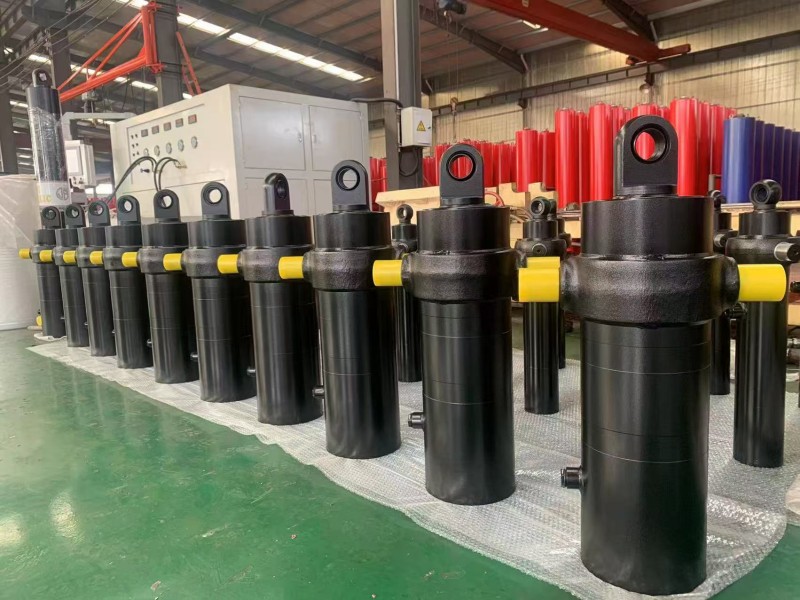
A tipping cylinder’s real-world performance is determined by the load it has to move, not by trailer size alone. Two trailers with similar bed dimensions can place very different demands on the hydraulic system if one carries light, free-flowing material and the other carries dense or compacted payloads. Lifting capacity must be matched to maximum payload weight, and material type directly changes how much force is needed during the tipping cycle. Sand, gravel, rocks, asphalt, demolition debris, soil, and agricultural loads do not behave the same way once the bed begins to rise, so a cylinder that feels adequate for one application may struggle in another.
This is especially important because resistance is not only about total weight. Wet or sticky material can cling to the bed longer, forcing the cylinder to keep pushing while the load shifts more slowly than expected. Uneven distribution creates a second problem: the cylinder may still generate enough lifting force overall, but the bed can rise under asymmetrical stress. That increases pressure on mounts, crossmembers, and the trailer structure even before the material starts to discharge. Overloading the bed can still stress cylinder mounts and frame members, especially when the load is not centered.
Performance factor | Why it changes cylinder behavior |
Total payload weight | Increases the hydraulic force needed to start and sustain the lift |
Material density | Heavier materials create higher resistance even at similar bed volume |
Moisture or stickiness | Slows discharge and keeps load pressure on the bed for longer |
Uneven load distribution | Causes off-center stress, bed flex, and less predictable lifting |
Material flow characteristics | Determines how quickly gravity can assist once the bed angle rises |
Mounting geometry is one of the biggest reasons the same hydraulic system can perform differently across trailer designs. A tipping cylinder does not lift the bed in isolation. It pushes at a specific point on the chassis and dump body, and that position determines the leverage available throughout the stroke. Engineers therefore consider mounting configuration, bed length, and lifting angle when choosing a cylinder setup, because improper positioning can create uneven lifting or structural stress.
In practical terms, leverage changes as the bed rises. At the start of the lift, the cylinder must overcome the heaviest moment because the body is still close to horizontal and gravity works strongly against the upward motion. A well-positioned cylinder improves this initial lifting advantage, while a poor geometry setup forces the hydraulic system to work harder than its paper specifications suggest. That is why single telescopic cylinders and dual-cylinder layouts can behave differently even when both are fitted to trailers of similar capacity. Single telescopic systems often provide stronger initial lifting power and a higher dump angle, while dual-cylinder systems trade some of that initial leverage for better balance and load sharing.
Cylinder performance should never be judged by force output alone, because dumping stability depends on the trailer as a whole. During lifting, the hydraulic cylinder, frame, hinge points, axle support, and ground conditions all interact. Uneven ground increases tipping cylinder stress during dumping operations, and side-to-side stability becomes a concern when the trailer is not level or when the load shifts during the lift.
For operators, this is where many real job-site problems appear. A cylinder may be technically capable of raising the load, yet the dump can still become unsafe if the trailer is parked on a slope, if the cargo is biased to one side, or if dense material suddenly breaks loose partway through discharge. Single-cylinder systems may achieve a better dump angle, but they can be more vulnerable to bed flex or reduced lateral stability on uneven ground. Dual-cylinder arrangements often improve balance because the load is shared across both sides, though they may sacrifice some lifting geometry advantages.
To protect both the hydraulic system and the trailer structure during lifting, operators should focus on a few fundamentals:
● keep the trailer on stable, level ground before starting the dump cycle
● avoid off-center loading that increases twist during bed rise
● match cylinder capacity to real payload conditions, not average loads
● watch for sudden load shift when handling wet, compacted, or mixed materials
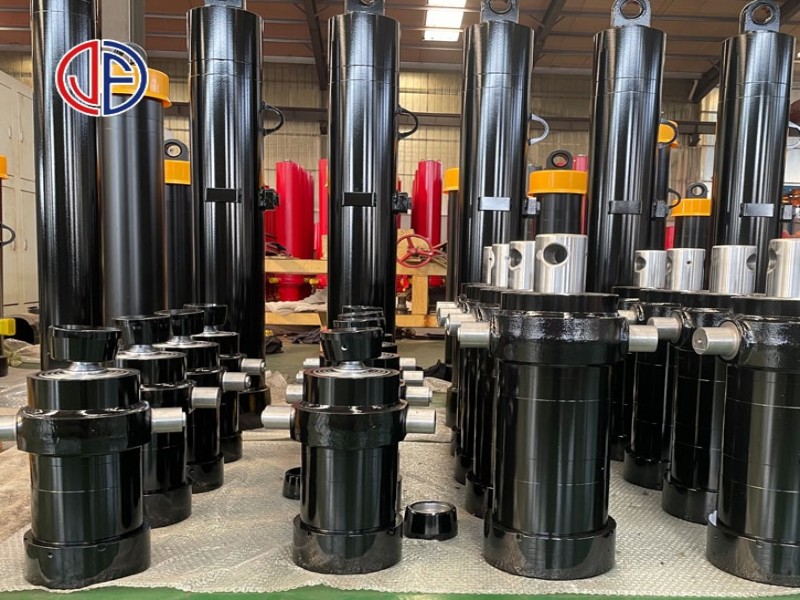
In heavy-duty trailers, space under the bed is limited, but the trailer still needs enough lift to create a steep dumping angle. That is why a telescopic tipping cylinder is so widely used. Instead of relying on one long cylinder body, it uses multiple nested stages that extend in sequence. This lets the cylinder stay compact when retracted while still delivering a long stroke during unloading.
In practical terms, that combination matters because heavy materials often need a higher lift angle to clear the bed efficiently, especially when the trailer handles gravel, soil, debris, or other dense loads. A telescopic setup is especially practical when the trailer must lift high without sacrificing layout efficiency. It also suits applications where the bed design leaves little room for a long closed-length cylinder. For many operators, the appeal is straightforward: more reach, better dump angle, and a compact installation that works well in demanding trailer configurations.
Setup factor | Why it matters when selecting a tipping cylinder |
Stroke length | Determines whether the trailer can reach the dump angle needed for clean unloading |
Retracted size | Affects how easily the cylinder fits within limited chassis space |
Lifting force | Must match actual payload and material resistance |
Control needs | Helps determine whether a simpler or more controlled system is the better fit |
Once the cylinder style is narrowed down, the next decision is how the system should move. A single-acting tipping cylinder uses hydraulic pressure to raise the bed, then relies on gravity to bring it back down. This layout is common in dump trailers because it is simpler, lighter in hydraulic design, and well suited to straightforward lifting tasks.
A double-acting system uses hydraulic pressure for both extension and retraction, which gives the operator more direct control over both upward and downward movement. That can be useful when lowering speed, motion precision, or powered return matters more than simplicity.
For setup decisions, the trade-off is usually clear:
● choose single-acting when the priority is a simpler dump trailer system with fewer hydraulic demands
● choose double-acting when the application benefits from tighter motion control and powered lowering
● match the system to the trailer’s real workload, because material type, dump frequency, and operating conditions affect which design feels more practical in daily use
A tipping cylinder rarely fails without warning. In most cases, the first signs appear as small performance changes that operators notice during normal unloading cycles. One of the most common signals is slow lifting speed. If the trailer bed rises more gradually than usual, the cause may be pressure loss, contaminated hydraulic oil, internal seal wear, or leakage somewhere in the system. Uneven or jerky motion is another warning sign, because a healthy cylinder should extend in a controlled and consistent way rather than hesitate or surge during the lift.
Visible oil leakage also deserves immediate attention. Even a minor leak around seals, hose connections, or ports can reduce pressure and gradually weaken lifting performance. Over time, that same leak can allow dirt or moisture into the hydraulic system, which increases internal wear and shortens service life. Operators should also watch for cases where the trailer no longer reaches its normal tipping angle. That problem often points to reduced stroke efficiency, low fluid level, trapped air, or developing wear inside the cylinder assembly. These symptoms matter because they are usually not isolated issues. They are early warnings that a small maintenance problem may become a more expensive repair if ignored.
Warning sign | What it may indicate |
Slower bed lift | Pressure loss, fluid contamination, or internal wear |
Jerky or uneven extension | Air in the system, unstable flow, or seal problems |
Visible hydraulic oil leaks | Failing seals, loose fittings, or hose damage |
Reduced dump angle | Low fluid level, internal leakage, or stroke inefficiency |
Unusual noise during operation | Binding, pressure irregularity, or worn moving parts |
The most effective way to keep a tipping cylinder reliable is to focus on routine inspection before problems affect production. Hydraulic oil is the starting point because clean fluid protects internal surfaces and helps the cylinder move smoothly under load. If the oil level is low or the fluid looks dirty, the system may lose efficiency long before a major failure becomes obvious. Regular fluid checks also help operators spot contamination early, which is important because worn components often begin with poor lubrication or dirty oil moving through the system.
Seals, hoses, and piston rods deserve the same level of attention. Seals hold pressure inside the cylinder, so once they begin to wear, the whole system becomes less efficient. Hoses and fittings should be checked for cracking, seepage, or looseness, since these issues often start small and then worsen under pressure. The piston rod should remain clean and free from scoring, corrosion, or dents, because surface damage can shorten seal life and affect extension quality. Mounting points also matter more than many operators realize. If brackets, pins, or connection points develop looseness or stress damage, the cylinder may still function, but it will do so under poor alignment that increases wear over time.
A practical maintenance routine should stay focused on the essentials:
● check hydraulic fluid level and condition on a regular schedule
● inspect seals and hose connections for early leakage
● keep the piston rod clean and watch for surface damage
● examine mounting points for looseness, wear, or misalignment
● test cylinder movement periodically to catch rough operation early
Consistent inspection usually costs far less than emergency repair because it reduces unexpected downtime, protects surrounding hydraulic parts, and helps operators fix small issues before they become full system failures.
Tipping cylinders are vital for safe, smooth trailer unloading. Understanding their function, performance factors, and maintenance needs helps reduce risk and improve efficiency. Shandong junfu hydraulic technology Co.,Ltd. provides reliable hydraulic solutions that support stable lifting, longer service life, and better value in heavy-duty trailer applications.
A: A tipping cylinder converts hydraulic pressure into lifting force to raise the trailer body for unloading.
A: A telescopic tipping cylinder provides long stroke in limited space, making high dump angles easier to achieve.
A: Tipping cylinder performance depends mainly on load weight, material behavior, mounting geometry, and trailer stability.
A: A tipping cylinder should be inspected when lifting slows, motion becomes uneven, or hydraulic leaks appear.