Introduction
Payload alone no longer defines dump truck performance in 2026. Buyers and fleet managers now care just as much about unloading speed, lifting stability, uptime, and control. The tipping cylinder plays a central role in all of these results. In this article, you will learn how it helps transform dump truck efficiency, safety, and daily jobsite performance.
How Tipping Cylinders Improve Dump Truck Performance
A tipping cylinder does far more than raise a dump body. In real operating conditions, it directly shapes how quickly a truck can complete each haul, how confidently it can handle dense material, and how safely it can unload on uneven or demanding sites. Three performance gains matter most: faster bulk unloading through gravity-assisted discharge, strong hydraulic lifting force under multi-ton payloads, and smoother motion through controlled flow and pressure regulation. Together, these advantages make the tipping cylinder one of the most important contributors to dump truck productivity in 2026.
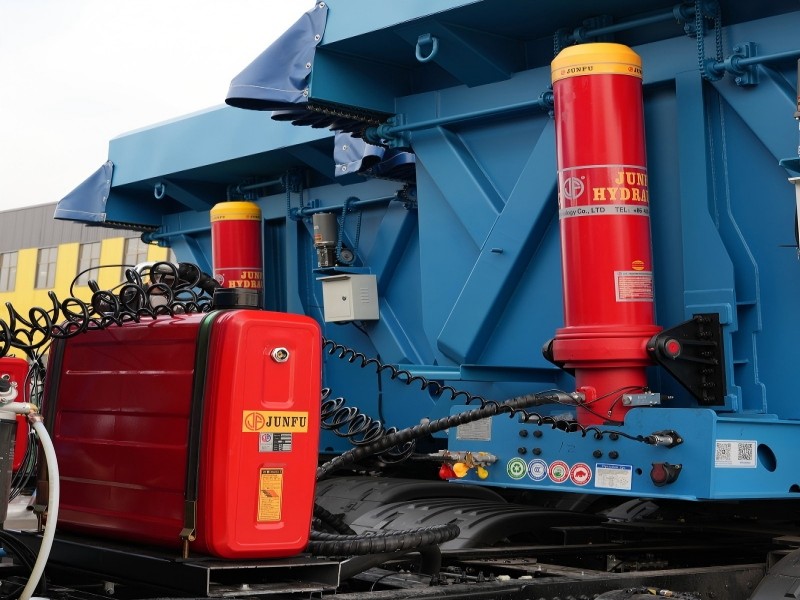
Faster unloading and shorter work cycles
When a tipping cylinder extends, it increases the dump body angle until gravity can move the load toward the tailgate. That basic motion has a major effect on operational tempo. Faster, cleaner unloading means the truck spends less time stationary, returns to transport position sooner, and can re-enter the haul route with less delay. On busy construction and aggregate sites, that improvement compounds across every shift because cycle efficiency determines how much material a fleet can move in a day.
Performance factor | How the tipping cylinder contributes | Operational result |
Bed lift speed | Converts hydraulic pressure into fast extension | Shorter unloading time |
Dump angle buildup | Raises the body until material flows by gravity | More complete discharge |
Controlled lowering | Returns the body efficiently after unloading | Faster reset for the next trip |
Smooth flow regulation | Reduces jerky motion during lift and descent | Less interruption in the work cycle |
Stronger lifting performance under heavy loads
Reliable lifting force is essential when dump trucks handle gravel, ore, rubble, wet soil, or other dense materials that place significant stress on the hoist system. Hydraulic pressure acting on the piston surface creates powerful linear force, allowing the cylinder to raise several tons without requiring oversized mechanical structures. That matters because real-world loads are not always evenly distributed, dry, or easy to release. A tipping cylinder with sufficient lifting capacity helps the truck start the dump cycle decisively, maintain lifting momentum under resistance, and reach the angle needed for complete unloading.
This becomes even more important in harsh duty cycles such as mining, quarrying, and heavy construction, where trucks work repeatedly under high pressure, contamination, and heat. Engineers now optimize tipping cylinder systems with stronger materials, better rod surfaces, and smarter hydraulic control, all of which support repeatable lifting performance when the truck faces heavy payloads day after day. In other words, strong lifting is not only about peak force. It is also about maintaining that force consistently without deformation, pressure loss, or unstable motion.
Better dumping control and safer operation
Performance is not only about speed and force. A dump truck must also unload with predictable, stable motion. Modern hydraulic systems use control valves and flow regulators to manage extension and retraction speed, helping operators avoid sudden bed movement or unstable dumping behavior. That smoother motion reduces stress on the tipping cylinder, protects the dump body structure, and lowers the risk of uneven lifting or shifting loads during discharge.
A well-controlled tipping action also improves site safety. When the lift remains steady and the body angle rises in a controlled way, the operator is better able to unload on stable ground, manage heavy material flow, and avoid shock loads on the chassis. This is why dumping control is closely linked to overall reliability: smoother hydraulic response not only helps prevent accidents, but also limits wear on seals, hoses, and structural mounting points. In high-cycle operations, that balance between control and force is what turns a tipping cylinder from a basic lifting device into a true performance system.
Why This Performance Impact Matters More in 2026
In 2026, dump truck performance is judged less by raw lifting ability alone and more by how consistently a fleet can move material across long shifts with minimal interruption. Contractors and mine operators are under growing pressure to improve cycle time, equipment uptime, fuel efficiency, and safety at the same time. That raises the importance of the tipping cylinder, because its hydraulic behavior directly affects how fast the body lifts, how predictably the load is discharged, and how quickly the truck returns to transport mode. When fleets operate in high-volume construction, quarry, or mining environments, even small inefficiencies in dumping speed or control can multiply into lost productivity across the day.
Fleet efficiency expectations are higher than before
The 2026 operating environment rewards machines that deliver repeatable output, not just peak force. Infrastructure demand, mining intensity, and regulatory pressure are all pushing fleets toward higher productivity, lower emissions, and better operational discipline. That means dump trucks are increasingly evaluated by tons moved per shift, downtime exposure, and fuel burned per cycle rather than by isolated component specifications. A tipping system that lifts smoothly and resets quickly supports all three goals, because it keeps the truck in motion, reduces wasted time at the dump point, and limits extra hydraulic load that can increase fuel consumption.
2026 fleet priority | Why it matters | Why the tipping system is involved |
Faster cycle completion | More loads per day improve site output | Dump speed and reset speed affect turnaround time |
Higher uptime | Delays and repairs reduce fleet utilization | Stable hydraulic operation lowers failure risk |
Fuel efficiency | Cost and emissions now carry more weight | Efficient hydraulics reduce parasitic losses |
Consistent operation | Predictable output improves planning | Smooth lifting and dumping reduce variability |
Performance now depends on smarter hydraulic behavior
Modern dump trucks also demand more intelligent hydraulic control than before. Pump, valve, cylinder, and line matching now determines lifting force, cycle speed, smoothness, and safety margins, while newer systems integrate telematics, payload monitoring, tip-angle sensing, and predictive maintenance features. In practice, this means performance depends not only on whether the bed rises, but on whether it rises at the right speed, under the right pressure, with stable motion and reliable feedback.
Several 2025–2026 developments reinforce that shift:
● Predictive monitoring is being used to track seal condition, pump efficiency, and fluid contamination before failure develops.
● Assisted hoist and integrated control logic improve cycle-time consistency while protecting safety margins.
● Electro-hydraulic architectures are gaining attention because they allow more precise control and better efficiency independent of engine speed.
As a result, the tipping cylinder in 2026 matters more because it is no longer just a lifting device inside a dump truck hydraulic system. It has become part of a broader control architecture that shapes productivity, reliability, and operating cost every day.
What Is Changing in Tipping Cylinder Design in 2026
In 2026, tipping cylinder design is moving beyond simple lifting capacity and toward systems that can protect uptime, adapt to demanding duty cycles, and operate with greater precision over a longer service life. Two clear directions are driving this shift: more intelligent monitoring that helps operators detect faults before they become failures, and more durable cylinder construction combined with tighter matching between the cylinder, hydraulic controls, and vehicle geometry. Together, these changes reflect a broader expectation that dump truck hydraulic systems should deliver not only force, but also predictability, lower maintenance exposure, and better long-term operating value.
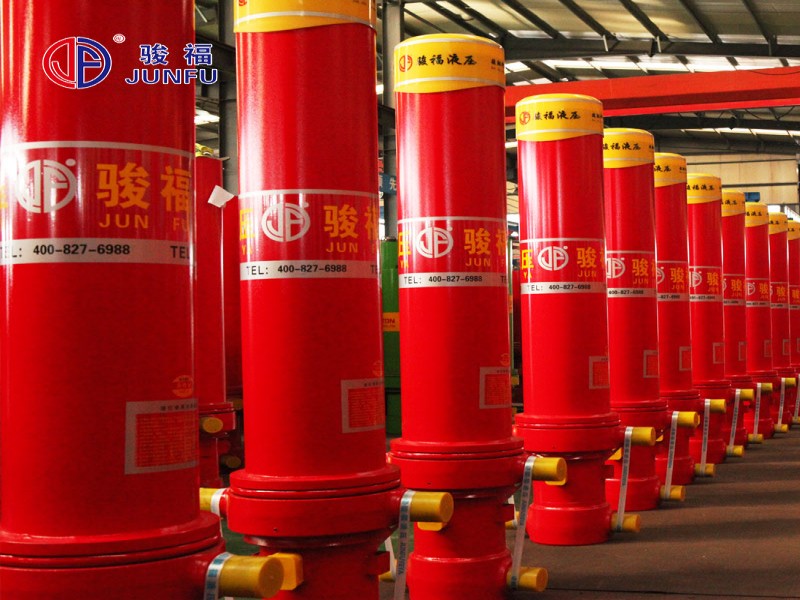
Smarter monitoring and reduced downtime
One of the most important developments is the growing use of condition tracking inside the hydraulic system. Rather than waiting for obvious symptoms such as slow extension, seal leakage, or pressure loss, newer tipping cylinder setups increasingly rely on sensors that monitor pressure behavior, piston position, fluid condition, and overall system response in real time. That makes it easier to identify overload events, abnormal pressure spikes, contamination, and early seal deterioration before they interrupt production. Monitoring is no longer limited to basic warning signals. It is becoming part of everyday fleet management and uptime planning.
2026 design shift | What it tracks or improves | Main operational benefit |
Pressure and position sensing | Lift behavior and abnormal load response | Earlier fault detection |
Fluid and seal condition tracking | Contamination and wear trends | Reduced unplanned downtime |
Hoist event logging | Cycle counts and usage patterns | Better maintenance scheduling |
Connected diagnostics | Remote visibility into hydraulic health | Faster service decisions |
More durable and better-matched cylinder systems
Durability improvements are also becoming more targeted. Stronger alloy steels, harder rod surfaces, and corrosion-resistant treatments help cylinders survive repeated heavy lifting cycles without fatigue, deformation, or excessive friction. These upgrades matter because dump trucks increasingly work in harsher environments with more heat, contamination, side loads, and continuous operation, especially in quarry and mining applications. Better thermal management, improved sealing compounds, and cleaner hydraulic fluid control are all part of the same goal: keeping the tipping cylinder stable and responsive over a much longer working life.
At the same time, manufacturers are putting more emphasis on system matching rather than treating the cylinder as a standalone part. Stroke length, lifting force, mounting points, bed geometry, valve tuning, and duty-cycle demands now have to be engineered together so that the cylinder performs efficiently under real operating conditions. Proper pump-valve-cylinder-line matching affects lifting force, cycle speed, smoothness, and safety margins, while application-specific configurations help align the cylinder with payload distribution, tipping angle targets, and environmental stress. This is why 2026 tipping cylinder design is increasingly defined by integration: a stronger cylinder matters, but a better-matched cylinder system delivers the real performance gain.
What This Means for Operators and Fleet Decision-Makers
For operators and fleet decision-makers, the tipping cylinder can no longer be treated as a background hydraulic part that only matters when something fails. In 2026, it sits much closer to the center of dump truck performance because it directly affects three outcomes that determine fleet profitability: how much material a truck can move in a shift, how safely it can unload under real site conditions, and how reliably it can stay in service without unplanned interruptions. Modern dump performance now depends on hydraulic system efficiency, smoother valve control, stronger durability, and better integration with monitoring and safety functions, which means the tipping cylinder influences both daily output and long-term operating cost.
Why the tipping cylinder is now a performance-critical component
From a productivity standpoint, the tipping cylinder controls how quickly the dump body rises, how consistently the load clears, and how fast the truck returns to travel position. Those actions shape cycle time, and cycle time shapes total site output. Gravity-assisted unloading, high lifting force, and long-stroke compact designs help trucks complete more working cycles in a day, especially in construction, aggregate, and mining operations where repeated tipping is part of the core workflow. For a fleet manager, that turns cylinder choice into a throughput decision rather than a simple component purchase.
Decision area | Why the tipping cylinder matters |
Productivity | Lift speed, dump angle, and reset speed affect loads per shift |
Safety | Smooth flow control and stable bed motion reduce unstable dumping risk |
Reliability | Better materials, sealing, and monitoring lower failure exposure |
Operating cost | Efficient hydraulics help reduce downtime, repair frequency, and wasted fuel |
Its safety role is equally important. Pressure-control valves, flow regulators, stability monitoring, tip-angle sensing, and operator-assistance features help prevent sudden or unstable dumping behavior. That matters because dump trucks often work on uneven ground, under variable load distribution, and in harsh environments where a poorly controlled lift can create structural stress or dangerous discharge conditions. For operators, a well-matched tipping cylinder system means steadier bed movement and more predictable unloading. For fleet leaders, it means fewer incidents, less chassis and body stress, and a lower chance that bad hydraulic behavior will cascade into bigger equipment damage.
Reliability is the third reason this component has become performance-critical. Modern tipping cylinder design now includes high-strength materials, improved sealing, thermal management, contamination control, embedded sensors, predictive maintenance, and application-specific configuration. In practice, that changes how fleets should evaluate hydraulic systems. A cylinder is no longer just rated by lift force. It also needs to be judged by how well it resists wear, how early faults can be detected, and how closely its stroke, mounting geometry, and control behavior match the truck’s actual duty cycle. That is why the tipping cylinder now belongs in strategic equipment decisions alongside payload, fuel efficiency, and uptime planning.
Conclusion
In 2026, tipping cylinders improve dump truck speed, control, and dependability in real working conditions. Better cylinder performance now means better truck performance every day. Shandong junfu hydraulic technology Co.,Ltd. delivers reliable hydraulic solutions with strong lifting performance, stable operation, and lasting value for demanding dump truck applications.
FAQ
Q: How does a tipping cylinder improve dump truck cycle time?
A: A properly sized tipping cylinder speeds bed lift and return, reducing unloading delays and improving loads per shift.
Q: What makes a tipping cylinder reliable in heavy-duty operations?
A: A durable tipping cylinder needs strong materials, clean hydraulics, seal protection, and correct system matching for repeated high-load cycles.
Q: Why do modern dump trucks need more precise hydraulic dumping control?
A: Better control lets the tipping cylinder deliver smoother motion, safer unloading, and more consistent performance under variable site conditions.


