Heavy trucks move tons of materials daily. But how do they unload so quickly?The answer is the tipping cylinder. It converts hydraulic pressure into lifting motion.In this article, we explain how tipping cylinders work. You will learn their structure, process, and benefits.
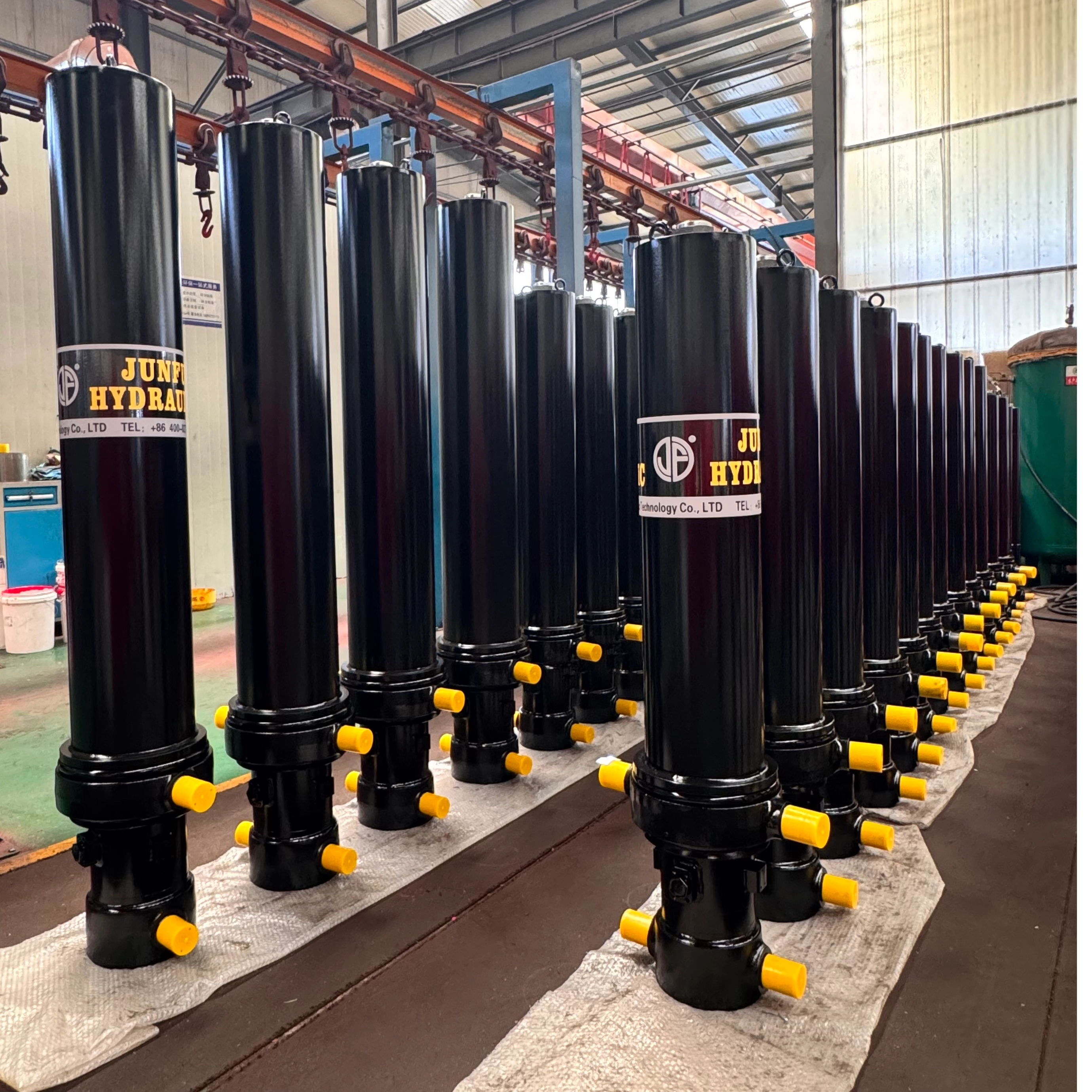
What Is a Tipping Cylinder in Dump Truck Hydraulic Systems
Definition of a Tipping Cylinder
A tipping cylinder is a hydraulic actuator specifically designed to lift and tilt the dump body of a truck or trailer so that loose materials can slide out using gravity. The cylinder works by converting hydraulic fluid pressure into mechanical force that pushes against the dump body and raises its front end while the rear hinge acts as a pivot point.
As the cylinder extends, the angle of the dump body increases, and once the tipping angle becomes steep enough, gravity causes the load to move toward the tailgate and exit the truck bed. This simple mechanical concept allows dump trucks to unload large volumes of material quickly while minimizing the amount of manual labor required on construction or industrial sites.
Main Components of a Tipping Cylinder
Although tipping cylinders vary depending on manufacturer and application, most hydraulic cylinders used in dump trucks include several fundamental components that allow the system to generate high lifting force and maintain hydraulic pressure during operation.
The most important parts of a tipping cylinder include:
● Cylinder barrel, which forms the outer housing that contains hydraulic pressure
● Piston and piston rod, which transfer hydraulic force into lifting motion
● Hydraulic seals, which prevent oil leakage and maintain internal pressure
● End caps and hydraulic ports, which allow hydraulic fluid to enter and exit the cylinder
Each component must be manufactured with high precision because the hydraulic system depends on airtight sealing and smooth piston movement to operate efficiently under heavy loads.
Component | Function | Importance |
Cylinder Barrel | Holds hydraulic pressure and piston assembly | Maintains structural strength |
Piston Rod | Transfers hydraulic force to dump bed | Creates lifting motion |
Hydraulic Seals | Prevent fluid leakage | Maintain system efficiency |
End Caps & Ports | Direct hydraulic fluid flow | Control cylinder operation |
Hydraulic Pressure and Linear Motion Conversion
The working principle of a tipping cylinder relies on hydraulic pressure acting on the surface area of a piston inside the cylinder barrel. When pressurized oil enters the cylinder chamber, it pushes the piston forward and causes the piston rod to extend outward.
Because hydraulic systems can generate very high pressure, even a moderately sized piston can produce tremendous lifting force, which allows dump trucks to raise loads that weigh several tons without requiring extremely large mechanical systems.
Role of Tipping Cylinders in Dump Trucks and Trailers
In dump trucks and trailers, the tipping cylinder connects the vehicle chassis to the dump body and provides the force required to raise the bed during unloading operations. When the cylinder extends, it pushes against the front section of the dump body, causing it to rotate upward around its rear hinge.
Once the tipping angle increases enough, gravity pulls the materials toward the tailgate and out of the truck bed, which makes the unloading process simple and efficient for operators working in demanding industrial environments.
Always select tipping cylinders with sufficient lifting capacity for maximum payload weight.
How Tipping Cylinders Work in Dump Trucks and Trailers
The operation of a tipping cylinder follows a controlled hydraulic cycle that begins when the operator activates the truck’s hydraulic control system and ends when the dump bed returns to its transport position after unloading materials.
Step 1 – Hydraulic Pump Generates Pressure
The process begins when the dump truck engine powers a hydraulic pump connected to the vehicle’s hydraulic system. This pump draws hydraulic oil from a reservoir and pressurizes it so that the fluid can generate lifting force when it enters the cylinder chamber.
Hydraulic pumps used in dump trucks are typically gear pumps or piston pumps because these designs provide consistent pressure output and durability under heavy-duty operating conditions.
Step 2 – Hydraulic Fluid Enters the Tipping Cylinder
Once the hydraulic pump builds pressure, the fluid travels through hydraulic hoses and control valves before entering the tipping cylinder chamber, where the pressurized oil begins acting on the piston surface.
Control valves regulate the direction and flow rate of hydraulic fluid, which allows operators to control how quickly the cylinder extends and how smoothly the dump bed lifts.
Step 3 – Cylinder Extension Lifts the Dump Bed
As hydraulic pressure increases inside the cylinder, the piston begins moving forward and the piston rod extends outward. The rod pushes against the mounting bracket attached to the dump body, which gradually raises the front of the truck bed.
During this stage, the lifting angle increases steadily as the cylinder continues extending.
Step 4 – Gravity Unloads the Material
When the dump bed reaches a sufficiently steep angle, gravity takes over and the load begins sliding toward the rear tailgate of the truck. Materials such as sand, gravel, soil, or agricultural products move naturally toward the back and fall out of the truck bed.
This gravity-assisted unloading process allows dump trucks to discharge materials quickly and efficiently without additional mechanical handling.
Step 5 – Cylinder Retraction Lowers the Bed
After unloading is complete, the operator releases the hydraulic control valve, which allows hydraulic fluid to flow back into the reservoir. As pressure decreases inside the cylinder chamber, the piston retracts and the dump bed slowly returns to its horizontal position.
Control Systems That Regulate Dumping Speed
Modern hydraulic systems include pressure control valves and flow regulators that ensure smooth lifting and prevent sudden or unstable movements of the dump bed during operation.
These control systems protect both the tipping cylinder and the structural components of the dump truck.
Types of Tipping Cylinders Used in Dump Trucks
Different types of tipping cylinders are used in dump trucks and trailers depending on the lifting requirements, installation space, and load weight.
Telescopic Tipping Cylinders
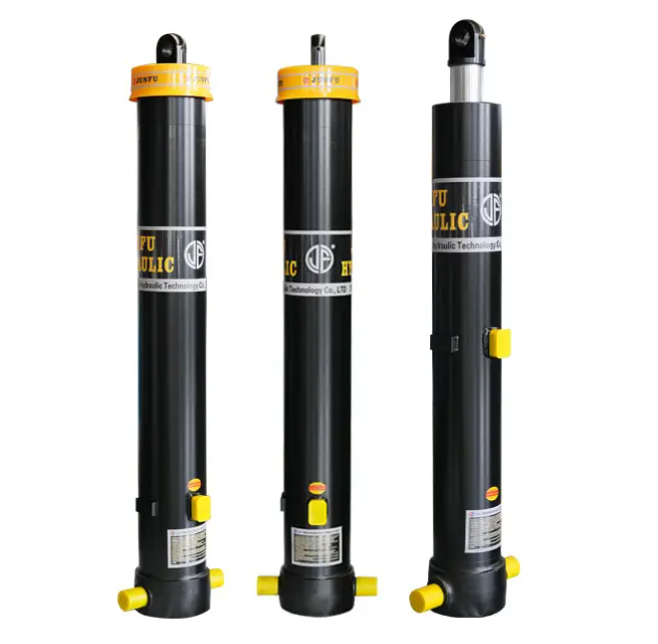
Telescopic cylinders contain multiple nested stages that extend sequentially during operation. This design allows the cylinder to achieve a very long stroke while remaining compact when retracted.
These cylinders are commonly used in large dump trucks because they provide high dump angles and powerful lifting force.
Single-Acting Tipping Cylinders
Single-acting cylinders use hydraulic pressure only during the extension phase, while gravity returns the cylinder to its original position during retraction.
This design is simple and commonly used in dump trailers.
Double-Acting Tipping Cylinders
Double-acting cylinders use hydraulic pressure for both extension and retraction, which provides greater control over the lifting and lowering process.
Multi-Stage Hydraulic Dump Cylinders
Multi-stage cylinders can include four or five telescoping stages, which allows extremely long extension lengths for heavy-duty dumping applications.
Cylinder Type | Typical Application | Main Advantage |
Telescopic | Dump trucks | Long stroke in limited space |
Single-Acting | Dump trailers | Simple hydraulic design |
Double-Acting | Controlled lifting systems | Precise motion control |
Multi-Stage | Mining and heavy transport | Maximum lifting height |
Telescopic tipping cylinders are ideal when dump angle must exceed 45 degrees.
Key Components of a Dump Truck Hydraulic System
A tipping cylinder works as part of a complete hydraulic system that generates pressure and controls fluid movement throughout the truck.
● Hydraulic Pump and Power Source
The hydraulic pump converts engine power into hydraulic pressure, which drives the tipping cylinder during lifting operations.
● Hydraulic Reservoir and Fluid Management
The reservoir stores hydraulic fluid and helps maintain stable system temperature by allowing heat dissipation and air separation from the fluid.
● Control Valves and Flow Regulation
Hydraulic control valves direct the flow of fluid to extend or retract the tipping cylinder while maintaining safe pressure levels.
● Hoses, Fittings, and Hydraulic Lines
Hydraulic hoses and fittings transport pressurized oil between the pump, valves, and cylinder components.
Hydraulic hose inspection prevents pressure loss and system failure.
Tipping Cylinder Configurations in Dump Trucks and Trailers
Dump trucks may use different cylinder configurations depending on load capacity, truck design, and stability requirements.
● Single Cylinder Dump Systems
Many dump trucks use one large telescopic tipping cylinder mounted centrally under the dump body.
● Dual Cylinder Dump Systems
Some dump trucks use two hydraulic cylinders mounted along the sides of the chassis to provide greater stability during lifting.
● Scissor Hoist vs Direct Push Cylinder Systems
Scissor hoists use mechanical linkages to amplify lifting force, while direct push cylinders connect directly between the chassis and dump body.
● Choosing the Right Tipping Cylinder Configuration
Engineers consider load distribution, bed length, lifting angle, and vehicle stability when selecting cylinder configurations.
Improper cylinder positioning may cause uneven lifting or structural stress.
Advantages of Tipping Cylinder Systems in Material Transport
Tipping cylinder systems provide several advantages that make them essential for heavy material transport.
● High Lifting Force for Heavy Loads
Hydraulic cylinders can generate tremendous lifting force, allowing dump trucks to raise several tons of material easily.
● Efficient Bulk Material Unloading
Gravity-assisted unloading reduces the need for manual labor and speeds up transport operations.
● Compact Design with Long Stroke Capability
Telescopic cylinders provide long lifting strokes while occupying minimal installation space.
● Improved Job Site Productivity
Fast dumping cycles allow trucks to transport more loads during a workday.
Maintenance and Troubleshooting for Tipping Cylinders
Routine maintenance ensures long service life and prevents hydraulic failures.
Typical problems include hydraulic leaks, worn seals, slow extension speed, and pressure loss.
Operators should regularly inspect hydraulic fluid levels, piston rods, and cylinder seals.
Clean hydraulic oil is essential for preventing wear inside the cylinder system.
Operators should always unload materials on stable ground and inspect the tipping cylinder before each use.
Uneven ground increases tipping cylinder stress during dumping operations.
How Engineers Optimize Tipping Cylinder Performance
Modern hydraulic engineering focuses on improving the durability, efficiency, and operational safety of tipping cylinder systems used in dump trucks and trailers, and engineers achieve these improvements by combining stronger materials, advanced manufacturing technologies, and smarter hydraulic control systems that ensure the cylinder can operate reliably under heavy loads and harsh environments. One important optimization method involves the use of high-strength alloy steel, which increases the structural strength of the cylinder barrel and piston rod so that the tipping cylinder can withstand repeated lifting cycles and high hydraulic pressure without deformation or fatigue failure. In addition, engineers apply surface treatment technologies such as hard chrome plating on piston rods, which significantly reduce friction during extension and retraction while also improving corrosion resistance and extending the service life of the cylinder when it operates in outdoor construction or mining environments. Modern hydraulic systems also integrate advanced sensors and monitoring technology, allowing operators and control units to monitor hydraulic pressure, piston position, and system performance in real time, which improves safety and prevents damage caused by overload or abnormal pressure spikes. Finally, manufacturers increasingly develop custom tipping cylinder designs tailored to specific equipment requirements, carefully optimizing factors such as stroke length, lifting force, mounting configuration, and environmental resistance so that each cylinder matches the operational demands of dump trucks, mining vehicles, agricultural trailers, or industrial transport equipment.
Conclusion
Tipping cylinders form the core lifting mechanism that allows dump trucks and trailers to unload bulk materials quickly and efficiently by converting hydraulic pressure into controlled linear motion that raises the dump bed and allows gravity to discharge the load. These hydraulic systems are widely used in construction, mining, agriculture, and logistics industries because they provide reliable lifting force, efficient unloading capability, and compact mechanical design. Professional manufacturers such as Shandong junfu hydraulic technology Co.,Ltd. specialize in designing and producing high-quality tipping cylinder solutions that support heavy-duty transport equipment and improve hydraulic system performance in demanding industrial environments.
By understanding how tipping cylinders operate, including their hydraulic principles, structural components, cylinder types, and maintenance requirements, operators and engineers can select the correct equipment configuration and ensure safe operation in demanding industrial environments. When properly designed, installed, and maintained, tipping cylinder systems produced by experienced hydraulic equipment manufacturers like Shandong junfu hydraulic technology Co.,Ltd. remain one of the most effective and reliable solutions for heavy-duty material handling and transportation equipment.
FAQ
Q: What is a tipping cylinder in dump trucks?
A: A tipping cylinder is a hydraulic actuator that lifts the dump bed so materials slide out.
Q: How does a tipping cylinder work?
A: A tipping cylinder uses hydraulic pressure to extend a piston rod and raise the truck bed.
Q: Why do dump trucks use a tipping cylinder?
A: A tipping cylinder provides strong lifting force that allows fast unloading of bulk materials.
Q: How much does a tipping cylinder cost?
A: A tipping cylinder price varies by size, stroke length, and lifting capacity.
Q: What problems can occur in a tipping cylinder?
A: A tipping cylinder may develop leaks, worn seals, or slow lifting due to hydraulic pressure loss.


