1. Introduction
Why do excavators move such heavy loads so easily? The answer lies in the Excavator Cylinder. Hydraulic cylinders power lifting and digging machines. But what are the three types of hydraulic cylinders? In this article, you will learn their differences and applications.
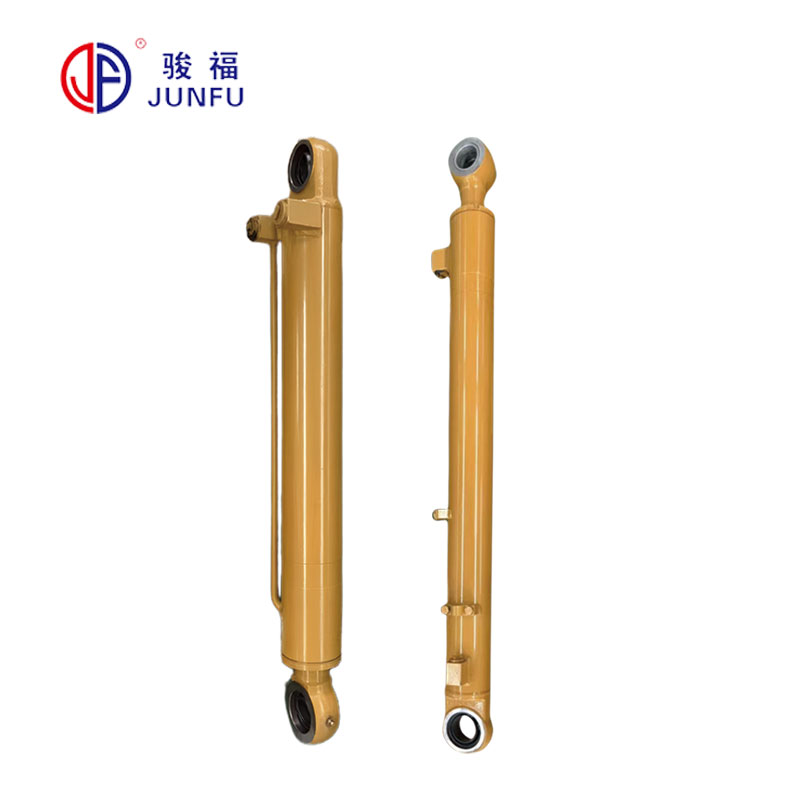
2. What Is a Hydraulic Cylinder and How Does It Work?
A hydraulic cylinder is a mechanical actuator designed to convert hydraulic pressure into linear mechanical movement, which allows heavy equipment to perform powerful lifting, pushing, or pulling actions with controlled precision. The cylinder works by directing pressurized hydraulic oil into a sealed chamber where the pressure pushes a piston forward, which in turn moves the piston rod outward and produces mechanical force that drives the connected machine component.
The Basic Components of a Hydraulic Cylinder
A typical Excavator Cylinder consists of several precisely engineered components that work together to deliver smooth and reliable movement under high pressure conditions, and each part plays an important role in maintaining performance and durability.
Component | Function |
Cylinder Tube | Houses piston movement and hydraulic fluid |
Piston | Separates pressure chambers inside the cylinder |
Piston Rod | Transfers motion from the piston to external machine parts |
Seals | Prevent hydraulic oil leakage and contamination |
Bushings | Reduce friction and support rod alignment |
End Caps | Seal the cylinder and connect mounting points |
High-quality hydraulic cylinders improve durability through advanced engineering and materials. For example, Junfu hydraulic cylinders use forged high-strength steel eyes, which improve both appearance and mechanical strength while also increasing the cylinder’s resistance to structural fatigue during long-term operation.
How Hydraulic Pressure Converts into Mechanical Force
Hydraulic systems operate based on Pascal’s Law, which states that pressure applied to a confined fluid is transmitted equally throughout the fluid. When hydraulic oil enters the cylinder chamber, the pressure pushes the piston surface and generates linear force that moves the piston rod outward.
The relationship between hydraulic pressure and output force can be represented using a simple formula:
Force = Pressure × Piston Area
For example, if a hydraulic system operates at 3000 psi and the piston area is 10 square inches, the output force generated by the cylinder would be approximately 30,000 pounds (validation required). This powerful force generation explains why hydraulic cylinders are capable of moving extremely heavy loads even when the components themselves are relatively compact.
Why Hydraulic Cylinders Are Critical in Excavator Systems
Excavators use multiple hydraulic cylinders simultaneously to perform coordinated mechanical movements that allow operators to control digging operations accurately. The most important cylinders in an excavator system include the boom cylinder, arm cylinder, and bucket cylinder, each of which plays a specific mechanical role in the excavation process.
Excavator Component | Cylinder Function |
Boom | Raises or lowers the main arm structure |
Arm | Controls reach and digging depth |
Bucket | Generates digging and loading force |
Manufacturers such as Shandong Junfu Hydraulic Technology improve cylinder performance through several advanced manufacturing features including burnished or vertical honing cylinder tubes that ensure excellent concentricity and straightness, induction-hardened piston rods that increase surface hardness before chrome plating, and high-precision machining that improves component consistency and reliability.
High precision machining and hardened rod surfaces greatly improve hydraulic cylinder service life.
3. What are the three types of hydraulic cylinders?
Hydraulic cylinders are generally classified into three main categories based on their internal design and operating principle, and each type offers different advantages depending on the mechanical requirements of the equipment where it is used.
Single-Acting Hydraulic Cylinders
Single-acting hydraulic cylinders apply hydraulic pressure in only one direction, which means hydraulic oil pushes the piston outward while the return motion is achieved through gravity, spring force, or external mechanical load. Because of their simple structure and lower manufacturing cost, single-acting cylinders are commonly used in equipment where motion is required in only one direction.
Typical applications include hydraulic jacks, lifting platforms, and some agricultural machinery where lifting motion is required but controlled retraction is less important.
Double-Acting Hydraulic Cylinders
Double-acting cylinders allow hydraulic pressure to act on both sides of the piston, which enables controlled extension and retraction of the piston rod. This design provides significantly better control over motion and is widely used in construction equipment because it allows precise bidirectional movement.
Most Excavator Cylinder systems are double-acting because excavators must both push and pull during digging operations, which requires strong and controlled movement in both directions.
Telescopic Hydraulic Cylinders
Telescopic cylinders consist of multiple nested cylinder stages that extend sequentially to provide a much longer stroke length compared with standard cylinders. These cylinders are often used when equipment requires a long extension range but limited installation space when retracted.
Typical applications include dump trucks, garbage trucks, and lifting platforms where the equipment must extend vertically over a large distance.
Key Differences Between the Three Cylinder Types
Cylinder Type | Motion Direction | Structural Complexity | Typical Equipment |
Single Acting | One direction | Simple | Jacks and lifting devices |
Double Acting | Two directions | Moderate | Excavators and loaders |
Telescopic | Multi-stage extension | Complex | Dump trucks |
Among these designs, double-acting cylinders are the most common in excavator systems because they provide the highest level of control and reliability during demanding excavation tasks.
Excavator systems almost always require double-acting cylinders due to the need for controlled bidirectional movement.
4. How Excavator Cylinders Use Different Hydraulic Cylinder Types
Excavators use several hydraulic cylinders working together to perform coordinated mechanical operations that allow the machine to dig, lift, and move materials efficiently on construction sites.
Boom Cylinders and Heavy Lifting Requirements
Boom cylinders are responsible for raising and lowering the entire excavator arm assembly, which means they must handle extremely heavy loads and maintain stability even under high hydraulic pressure conditions. Because of these requirements, boom cylinders typically use large bore diameters and reinforced steel structures to withstand heavy mechanical stress.
Arm Cylinders and Precision Movement
Arm cylinders control the forward reach of the excavator and play an important role in controlling digging depth and positioning accuracy. These cylinders must provide smooth motion while maintaining strength and stability under repeated cycles.
Junfu cylinders improve this precision by using burnished or vertical honing tubes, which ensure better internal surface accuracy and reduce friction during piston movement.
Bucket Cylinders and High Digging Force
Bucket cylinders generate the primary digging force used to penetrate soil and rock during excavation. These cylinders operate under extremely high pressure and are exposed to frequent impact loads.
To maintain pressure stability, high-performance sealing materials such as Teflon or nylon piston seals are commonly used, while hardened bushings made from steel or copper reduce friction and improve long-term durability.
Bucket cylinders should be inspected frequently because they experience the highest stress in excavator operations.
5. Comparing Hydraulic Cylinder Types for Excavator Performance
Hydraulic cylinder performance directly influences the overall productivity of an excavator because cylinder force, stroke length, and durability determine how efficiently the machine can perform excavation tasks.
Force Output and Load Handling
The output force of a hydraulic cylinder depends mainly on hydraulic pressure and piston diameter, and larger cylinders generally produce stronger force.
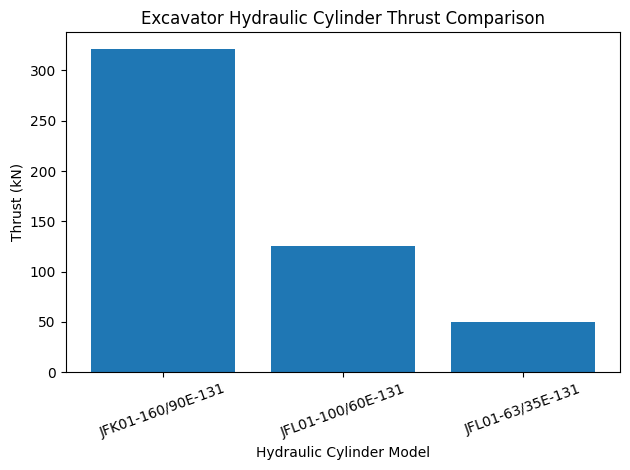
Example performance specifications from hydraulic cylinder models include:
Model | Stroke (mm) | Cylinder Diameter (mm) | Rod Diameter (mm) | Thrust (kN) | Pulling Force (kN) |
JFK01-160/90E-131 | 715 | 160 | 90 | 321.7 | 219.9 |
JFL01-100/60E-131 | 1200 | 100 | 60 | 125.66 | 87.65 |
JFL01-63/35E-131 | 300 | 63 | 35 | 50 | 34.5 |
These examples show how increasing piston diameter significantly increases cylinder force output.
Stroke Length and Movement Efficiency
Stroke length determines how far a cylinder can extend during operation, and longer strokes allow excavators to reach deeper digging areas or move materials more effectively. However, longer cylinders must also maintain structural rigidity to prevent bending or misalignment.
Durability and Maintenance Demands
Cylinder durability depends heavily on manufacturing quality, sealing materials, and rod surface hardness. Induction-hardened rods combined with enhanced chrome plating improve corrosion resistance and reduce scratches that may damage seals.
Cost vs Performance in Excavator Cylinder Selection
Although higher-quality cylinders may require a larger initial investment, they often reduce maintenance costs and downtime over the life of the machine.
High-quality cylinder seals and hardened rods reduce long-term maintenance costs.
6. Key Factors When Choosing the Right Excavator Cylinder
Selecting the correct Excavator Cylinder requires evaluating several technical factors including machine size, hydraulic system specifications, and operating environment.
● Excavator Size and Operating Capacity
Cylinder dimensions must match the size and weight class of the excavator because larger machines require stronger cylinders capable of handling higher loads.
● Hydraulic Pressure and Flow Compatibility
Hydraulic cylinders must be designed to match the pressure and flow capacity of the machine’s hydraulic system in order to maintain stable performance and avoid damage caused by excessive pressure.
● Operating Environment and Worksite Conditions
Excavation environments often include dust, mud, moisture, and extreme temperature changes, all of which can affect cylinder seals and metal components, so protective coatings and high-quality sealing systems are essential for maintaining durability.
● OEM Compatibility and Custom Excavator Cylinder Options
Many equipment owners choose custom hydraulic cylinders designed specifically for their machines, which may include special bore sizes, customized mounting points, or advanced sealing systems designed for specific working environments.
Always verify cylinder mounting dimensions and stroke length before installing replacement cylinders.
7. Common Excavator Cylinder Failures and Prevention
Hydraulic cylinders operate under intense mechanical stress, and several common failure types can occur if proper maintenance procedures are not followed.
● Hydraulic Seal Leakage
Seal damage can occur due to contaminated hydraulic oil, excessive pressure spikes, or normal wear over time, and leaking seals often result in reduced hydraulic efficiency and slower machine operation.
● Cylinder Rod Damage and Surface Scoring
Rod scratches or corrosion can damage sealing surfaces and lead to hydraulic leaks, which is why chrome plating and hardened rod surfaces are essential for protecting the cylinder during long-term use.
● Pressure Overload and Structural Fatigue
Repeated heavy loads may eventually cause rod bending or barrel deformation if the cylinder is not properly designed for the equipment’s operating conditions.
● Preventive Maintenance for Excavator Cylinders
Routine maintenance practices such as replacing hydraulic oil regularly, inspecting seals, and cleaning piston rods can significantly extend the lifespan of hydraulic cylinders and reduce equipment downtime.
Preventive maintenance programs help reduce unexpected cylinder failure.
8. Future Innovations in Excavator Cylinder Technology
Hydraulic cylinder technology continues to evolve as manufacturers develop new materials, monitoring systems, and energy-efficient designs.
● Advanced Materials for Stronger Hydraulic Cylinders
Modern cylinders often use high-strength alloy steels that provide greater fatigue resistance while maintaining structural stability during heavy load cycles.
● Smart Hydraulic Monitoring Systems
Advanced sensor systems can monitor pressure, temperature, and cylinder stroke movement in real time, allowing operators to detect potential problems before major failures occur.
● Energy-Efficient Hydraulic Cylinder Designs
Improved seal geometry and optimized hydraulic flow paths help reduce friction inside cylinders, which improves energy efficiency and reduces fuel consumption for heavy equipment.
Smart hydraulic monitoring technology can significantly reduce fleet maintenance costs.
9. Conclusion
Hydraulic cylinders are essential components in heavy machinery because they convert hydraulic pressure into powerful linear motion that enables construction equipment to lift, dig, and handle materials efficiently. The three main types of hydraulic cylinders—single-acting cylinders, double-acting cylinders, and telescopic cylinders—serve different purposes depending on the equipment's operational needs. Among them, double-acting cylinders are the most widely used Excavator Cylinder type because they provide controlled movement in both directions and deliver strong digging performance.
Manufacturers such as Shandong Junfu Hydraulic Technology Co., Ltd. produce high-quality hydraulic cylinders using advanced manufacturing processes, including forged steel eyes, induction-hardened piston rods, precision-honed cylinder tubes, and durable sealing systems. These features improve strength, reliability, and resistance to harsh operating conditions.
By choosing the right cylinder type, maintaining hydraulic systems properly, and working with reliable manufacturers, equipment owners can improve machine efficiency, extend service life, and reduce long-term maintenance costs.
FAQ
Q: What are the three types of hydraulic cylinders?
A: They are single-acting, double-acting, and telescopic cylinders, each designed for different motion and load requirements.
Q: Which hydraulic cylinder type is used in an Excavator Cylinder?
A: Most excavators use double-acting cylinders because they allow controlled extension and retraction.
Q: Why are Excavator Cylinder systems usually double-acting?
A: Double-acting cylinders provide stronger digging force and precise movement during excavation.
Q: How long does an Excavator Cylinder typically last?
A: With proper maintenance, an Excavator Cylinder can last several thousand operating hours.
Q: What causes Excavator Cylinder failure?
A: Common causes include seal leakage, rod scratches, contamination, and excessive pressure.


