Machines move tons of material daily. But what powers that motion?Cylinders convert energy into linear force. Some systems even use a tipping cylinder for heavy unloading.But what are three types of cylinders? Why do engineers choose different types?In this article, you will learn the main cylinder types. You will also understand how they work in industry.
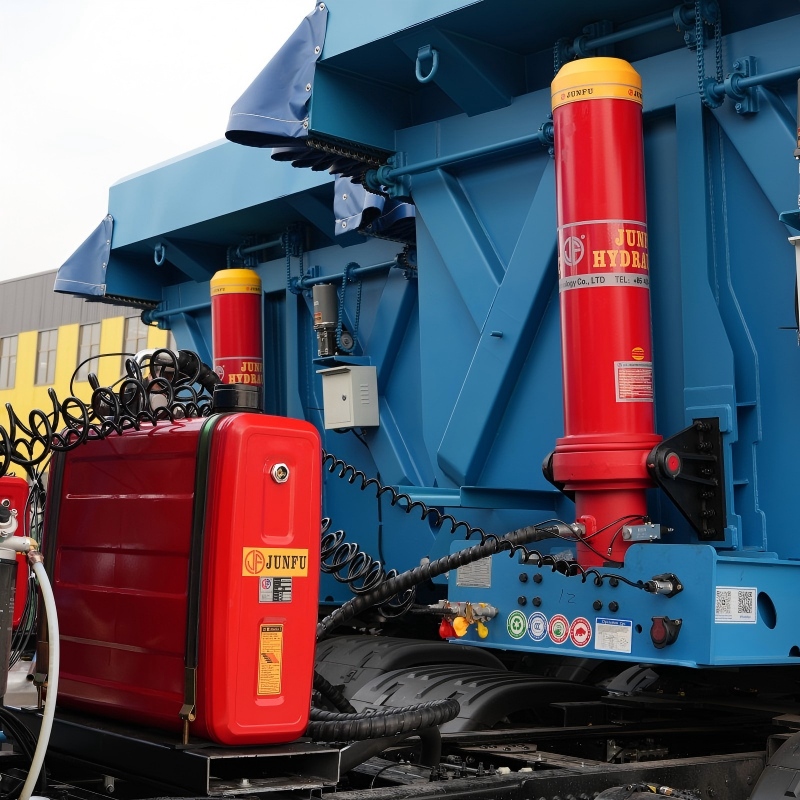
Understanding the Three Main Types of Cylinders
Engineers classify cylinders into three main types based on their energy source and operating principle. Each cylinder technology converts energy into linear mechanical movement using different mechanisms and components. Understanding these differences is important when selecting the most appropriate actuator for a specific industrial application.
Pneumatic Cylinders – Fast and Cost-Effective Motion
Pneumatic cylinders operate using compressed air as their energy source, and the compressed air generated by industrial compressors enters the cylinder chamber to push the piston and create linear motion. This movement allows pneumatic cylinders to operate quickly and repeatedly, which makes them ideal for high-speed automation systems used in packaging, assembly, and manufacturing operations.
One of the key advantages of pneumatic cylinders is their relatively simple structure and low operating cost. Because compressed air is widely available in industrial environments, pneumatic systems can be installed and maintained with minimal complexity. Pneumatic cylinders are also safe in overload situations because compressed air naturally cushions the movement of the piston.
However, pneumatic cylinders typically produce less force compared with hydraulic cylinders, which limits their application in heavy lifting operations.
Hydraulic Cylinders – High Force Systems for Heavy Equipment
Hydraulic cylinders use pressurized fluid rather than compressed air to generate movement, and hydraulic oil flows into the cylinder chamber where it pushes the piston forward and produces extremely strong mechanical force. Because liquids are nearly incompressible, hydraulic systems can deliver high power density and maintain stable motion under heavy loads.
Hydraulic cylinders are widely used in construction machinery, mining equipment, lifting systems, and industrial presses where large forces are required. They are also the primary technology used in tipping cylinder systems, which allow dump trucks and transport trailers to lift and unload bulk materials quickly and safely.
Electric Cylinders – Precision and Programmable Motion
Electric cylinders operate using electric motors that drive threaded screws or ball screws connected to the piston rod, and when the motor rotates the screw mechanism it converts rotational movement into linear motion. This technology allows electric cylinders to provide precise positioning control, which is essential in robotics, laboratory automation, and high-precision manufacturing equipment.
Electric cylinders are often preferred in applications where accuracy and repeatability are more important than raw lifting force. They also operate quietly and require less fluid maintenance compared with hydraulic systems.
Key Differences Between Pneumatic, Hydraulic, and Electric Cylinders
The following table summarizes the primary differences between the three cylinder technologies.
Cylinder Type | Energy Source | Strength Level | Typical Applications |
Pneumatic Cylinder | Compressed Air | Low to Medium | Automation lines, packaging |
Hydraulic Cylinder | Hydraulic Fluid | Very High | Construction machinery, tipping cylinder systems |
Electric Cylinder | Electric Motor | Medium | Robotics, precision machinery |
Select cylinder technology based on required force, motion precision, and operating environment.
Hydraulic Cylinder Designs and Their Role in Tipping Cylinder Systems
Hydraulic cylinders themselves can also be divided into several structural categories depending on how hydraulic pressure is applied and how the piston moves during operation. These designs influence the performance, force output, and stroke length of the cylinder.
Single-Acting Hydraulic Cylinders
Single-acting cylinders generate force in only one direction because hydraulic pressure is applied to one side of the piston. When the piston rod extends, an external force such as gravity, springs, or mechanical load returns the rod to its original position.
These cylinders are relatively simple and cost-effective, which makes them suitable for lifting tables, basic dumping mechanisms, and certain agricultural machines.
Double-Acting Hydraulic Cylinders
Double-acting cylinders apply hydraulic pressure on both sides of the piston, allowing the cylinder to extend and retract under hydraulic control. This design provides greater control over the movement of the load and is widely used in construction machinery, excavators, and industrial equipment.
Because the piston can move in both directions using hydraulic power, double-acting cylinders offer improved precision and operational flexibility.
Telescopic Cylinders and Long-Stroke Tipping Cylinder Applications
Telescopic cylinders consist of multiple nested cylinder stages that extend sequentially when hydraulic pressure is applied. This design allows a very long extension stroke while maintaining a relatively compact retracted size, which is particularly useful in equipment where installation space is limited.
Telescopic cylinders are commonly used in dump truck tipping cylinder systems, cranes, lifting platforms, and transport trailers because they can lift large loads to significant heights without requiring excessively large cylinder structures.
Why Hydraulic Cylinders Dominate Tipping Cylinder Applications
Hydraulic cylinders dominate tipping applications because they can generate extremely high lifting forces and maintain smooth, controlled motion even under heavy loads. A tipping cylinder must raise several tons of material while maintaining stability during unloading, and hydraulic fluid pressure allows this process to occur safely and efficiently.
Comment: Hydraulic cylinders remain the most reliable solution for heavy lifting operations.
Where Tipping Cylinder Technology Is Used
Hydraulic tipping cylinder systems are widely used across multiple industries where bulk materials must be transported and unloaded efficiently.
● Dump Truck Tipping Cylinder Systems
Dump trucks represent the most common application for tipping cylinder technology because they transport materials such as sand, gravel, and construction debris. When the tipping cylinder extends, it lifts the truck bed upward, allowing gravity to discharge the load from the vehicle.
● Construction Equipment and Material Handling Machinery
Construction equipment such as wheel loaders, cranes, and excavators also rely on hydraulic cylinders for lifting and positioning operations. These machines must move large quantities of material on construction sites where high force output is essential.
● Agricultural Machinery and Transport Equipment
Agricultural machinery uses hydraulic tipping cylinders in grain transport trailers and farm wagons, which allow harvested crops to be unloaded quickly at storage facilities or processing locations.
● Waste Management and Industrial Dumping Systems
Garbage trucks and industrial waste containers also depend on hydraulic cylinders to lift and tip containers during waste collection and disposal operations.
Industry | Typical Equipment Using Tipping Cylinders |
Construction | Dump trucks, loaders |
Agriculture | Grain trailers, farm wagons |
Mining | Mining trucks |
Waste Management | Garbage trucks |
Tipping cylinder systems significantly improve unloading efficiency.
Advantages and Limitations of the Three Cylinder Types
Each cylinder technology offers unique advantages and trade-offs depending on the application requirements.
● Advantages of Pneumatic Cylinders
Pneumatic cylinders are inexpensive, simple to install, and capable of high-speed operation. They are widely used in automated manufacturing systems and environments where clean operation is required.
● Advantages of Hydraulic Cylinders and Tipping Cylinder Systems
Hydraulic cylinders provide extremely high lifting force and stable motion control, making them ideal for heavy equipment such as dump trucks and industrial presses. Their compact design also allows powerful lifting systems to be integrated into mobile equipment.
● Advantages of Electric Cylinders
Electric cylinders provide excellent positioning accuracy and programmable motion control, which makes them suitable for robotic systems and automated manufacturing processes.
● Limitations and Trade-Offs Between Cylinder Technologies
Despite their advantages, each technology has limitations. Pneumatic cylinders produce limited force, hydraulic cylinders require regular maintenance and fluid monitoring, and electric cylinders may involve higher purchase costs.
Engineers must evaluate force requirements and maintenance considerations.
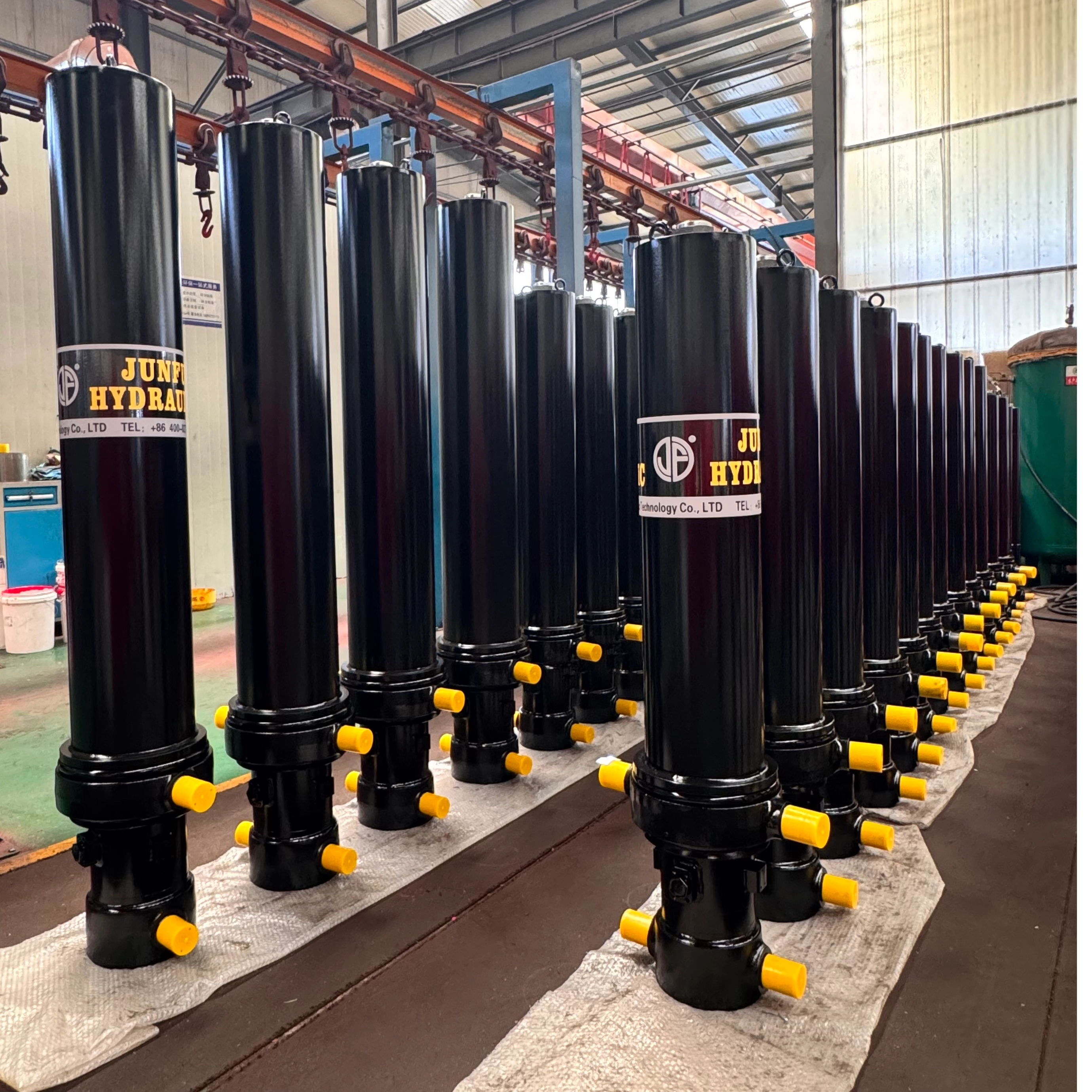
Comparing Cylinder Technologies for Industrial Applications
Choosing the correct cylinder requires analyzing performance factors such as load capacity, motion control, and operating cost.
Hydraulic cylinders generate the highest force levels, which makes them suitable for heavy industrial equipment and tipping cylinder systems. Pneumatic cylinders are better suited for lighter loads and automation systems.
Pneumatic cylinders operate quickly but provide limited motion control. Electric cylinders offer superior precision and programmable control, while hydraulic cylinders balance power and stability.
Electric cylinders typically require less fluid maintenance, while hydraulic systems require regular inspection of seals, hydraulic oil, and pressure systems.
Hydraulic tipping cylinder systems are ideal when machines must lift heavy loads repeatedly in industries such as construction, mining, and large-scale transportation.
Prompt: Hydraulic systems should be selected when heavy load lifting is required.
Choosing the Right Cylinder for Your Application
Selecting the correct cylinder requires careful engineering analysis.
Engineers calculate required cylinder force based on load weight, leverage ratios, and system pressure levels.
Equipment design often limits installation space, which is why telescopic cylinders are commonly used in tipping cylinder systems.
Operating environments may include dust, moisture, vibration, and temperature variations that affect cylinder durability and sealing performance.
Manufacturers often design customized hydraulic cylinders tailored to specific equipment requirements and industry standards.
Custom cylinder solutions improve reliability in specialized equipment.
Conclusion
Cylinders are essential components in industrial machinery because they convert energy into linear mechanical motion that powers lifting, pushing, and positioning operations. Engineers generally classify cylinders into three primary categories: pneumatic cylinders, hydraulic cylinders, and electric cylinders.
Pneumatic cylinders offer simplicity and high operating speed, electric cylinders provide excellent precision and programmable control, and hydraulic cylinders deliver the highest force output for heavy-duty tasks.
Among these technologies, hydraulic cylinders play a crucial role in tipping cylinder systems, which allow dump trucks, agricultural trailers, and industrial platforms to lift and unload bulk materials efficiently. Manufacturers such as Shandong Junfu Hydraulic Technology Co., Ltd. specialize in producing high-quality hydraulic cylinders and tipping cylinder systems designed for heavy equipment and industrial machinery.
Understanding the characteristics of each cylinder type helps engineers and equipment buyers choose the most suitable actuator for their machinery, ensuring improved productivity, longer equipment lifespan, and safer industrial operations when working with reliable manufacturers like Shandong Junfu Hydraulic Technology Co., Ltd..
FAQ
Q: What are three types of cylinders?
A: The three main types are pneumatic, hydraulic, and electric cylinders, each used for different motion and force requirements.
Q: Why is a tipping cylinder usually hydraulic?
A: A tipping cylinder uses hydraulic pressure to generate high lifting force for dump trucks.
Q: Where is a tipping cylinder commonly used?
A: A tipping cylinder is widely used in dump trucks, trailers, and industrial unloading platforms.
Q: How does a tipping cylinder lift heavy loads?
A: A tipping cylinder extends its rod using hydraulic pressure to tilt and unload materials.
Q: How much does a tipping cylinder cost?
A: A tipping cylinder price depends on size, stroke, and load capacity.
Q: What causes tipping cylinder failure?
A: A tipping cylinder may fail due to seal wear, oil contamination, or excessive pressure.


