When a dump body will not lift smoothly, the whole job slows down. That is why the tipping cylinder matters so much in dump truck and trailer systems. In this article, you will learn how it affects lifting efficiency, stability, equipment selection, and the maintenance decisions that keep machines working reliably.
Why Tipping Cylinders Matter in Dump Truck and Trailer Operation
How a tipping cylinder creates the lifting motion
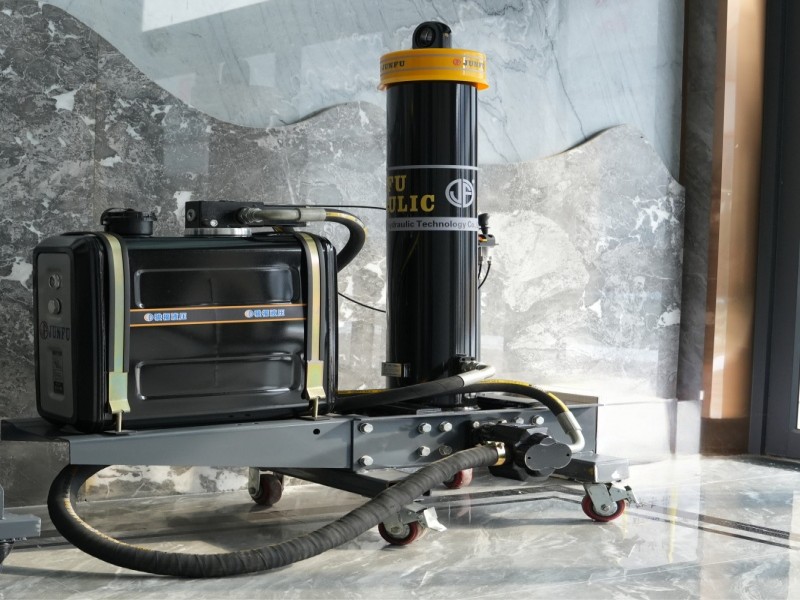
A tipping cylinder is the component that turns hydraulic pressure into the upward force needed to raise a dump body or trailer bed. In practical terms, pressurized fluid enters the cylinder, pushes the piston, and extends the rod so the front of the body rises while the rear hinge becomes the pivot point for the dump cycle. In many dump applications, this movement is handled by a single-acting setup: hydraulic power lifts the body, and gravity brings it back down once pressure is released. For dump trucks and trailers, that makes the tipping cylinder not just a hydraulic part, but the actuator that makes unloading possible in the first place.
Why it directly affects unloading efficiency
Unloading speed is not determined by hydraulic pressure alone. The tipping cylinder also affects how high the body can rise, how smoothly it lifts, and how well the load slides out once the dump angle increases. Telescopic cylinders are often chosen when equipment needs a long stroke from a compact installed length, because that combination helps achieve a higher dump angle without taking up too much space when retracted. That matters in real work: dense or sticky materials usually release more cleanly when the body reaches a steeper angle, while poor lift geometry can leave material hanging in the bed and slow down the cycle.
What the tipping cylinder influences | Why it matters in operation |
Lift force | Raises loaded dump bodies and trailers safely |
Stroke length | Helps determine achievable dump angle |
Retracted size | Affects whether the cylinder fits the chassis layout |
Lift smoothness | Supports controlled unloading and reduces shock |
Geometry match | Improves discharge performance and overall efficiency |
How it supports the overall dump mechanism
A tipping cylinder works as part of a larger mechanical system rather than as a standalone device. Its effectiveness depends on body length, hinge position, overhang, payload distribution, and the chosen hoist layout. Front-mounted telescopic arrangements are commonly used when strong front leverage and long stroke are needed in limited space, while underbody hoist layouts are valued for stable lifting under heavy-duty conditions. Some trailer systems use single-cylinder designs for stronger initial lift and higher dump angles, whereas dual-cylinder systems can improve side-to-side stability on uneven ground. Together, these examples show that the tipping cylinder supports the entire dump mechanism by influencing leverage, stability, and load control throughout the lift.
How Tipping Cylinders Affect Performance on the Job
Their impact on lift stability and dump angle
On the job, a tipping cylinder does more than raise the bed. It shapes how steadily the body lifts, how high it can tip, and how safely material leaves the truck or trailer. Front-mounted telescopic designs are often selected when operators need long stroke from a compact installed length, which helps the body reach a steeper dump angle without demanding excessive space on the chassis. Underbody hoist layouts, by contrast, are used when stable lifting motion is the priority, especially in frequent heavy-duty cycles. In practical terms, that means cylinder layout directly changes how controlled the dump feels from the first movement to full extension.
A higher dump angle is not just a specification on paper. It can determine whether wet soil, gravel, demolition debris, or other dense materials slide out cleanly or remain stuck in the bed. At the same time, lift stability matters just as much as angle. If the body rises with poor alignment or uneven support, the bed can sway, flex, or place extra load on surrounding structure. That is why tipping cylinder performance is tied closely to body geometry, hinge position, overhang, and payload distribution rather than hydraulic force alone.
Performance factor | How the tipping cylinder affects jobsite results |
Lift stability | Keeps the bed rising in a more controlled and predictable path |
Dump angle | Helps material discharge more completely |
Stroke length | Determines how much lifting travel is available |
Load distribution response | Affects how well the system copes with front-heavy or uneven loads |
Structural loading | Influences how much stress reaches mounts, frame members, and hinges |
How they handle heavy or uneven loads
Heavy or off-center loads are where cylinder choice starts to show its real value. Front-mounted telescopic cylinders can work well for front-heavy or uneven loads when the geometry is correct, while underbody hoist systems are often preferred in stability-first builds that lift under the body. For dump trailers, single-cylinder and dual-cylinder arrangements each bring trade-offs: a single telescoping cylinder tends to deliver strong initial lifting power and a higher dump angle, while dual-cylinder systems usually provide better side-to-side stability because the load is shared across both sides.
This matters in everyday operation because loads rarely behave perfectly. Material can settle to one side, shift during transport, or resist movement during discharge. A cylinder system that matches the body and duty cycle will handle those variations with less twist and less bed movement. A poorly matched one may still lift the load, but it does so with more strain and less control.
Key jobsite conditions that increase performance demands include:
● uneven ground during dumping
● sticky or high-density material
● front-loaded or side-shifted payloads
● repeated high-cycle tipping under full load
Why poor cylinder performance leads to mechanical stress
When tipping cylinder performance drops, the problem does not stay inside the cylinder. Slow extension, unstable lifting, inadequate dump angle, or poor alignment can push stress into mounts, crossmembers, hinges, and the bed itself. Overloading or poor load distribution can place stress on cylinder mounts and frame crossmembers even before the lift cycle begins. Single-cylinder systems can be more prone to bed flex on uneven ground or with shifting loads, while dual-cylinder systems trade some dump angle for improved stability.
In jobsite terms, poor cylinder performance usually shows up as extra shock, slower unloading, and more wear on connected parts. Over time, that can mean cracked mounts, distorted bed structure, hinge wear, or repeated repair work that looks like a frame problem but actually starts with cylinder mismatch, instability, or declining hydraulic performance.
How to Choose the Right Tipping Cylinder
What vehicle type and working conditions change the selection
Choosing the right tipping cylinder starts with one practical question: what kind of vehicle is doing the dumping, and under what conditions? Dump trucks and dump trailers do not always need the same hoist layout. Front-mounted telescopic cylinders are commonly used when the body needs long stroke from a compact retracted length and strong front leverage, while underbody hoist layouts are preferred when stable lifting under heavy-duty conditions is the priority. For trailer setups, underbody scissor arrangements are also a common choice because they support the bed differently during the lift.
Working conditions matter just as much as vehicle type. A unit that handles dense aggregates every day has different needs than one used for lighter bulk material or occasional farm work. Job requirements can shift selection toward faster dumping, greater control, or better side-to-side stability. In other words, the right tipping cylinder is not simply the strongest one available; it is the one that matches the dump body, material behavior, and duty cycle most closely.
Selection factor | Why it changes the cylinder choice |
Vehicle type | Dump trucks and trailers use different hoist layouts and packaging space |
Duty cycle | Frequent heavy tipping favors more stable, heavy-duty support |
Material type | Dense or sticky loads may require stronger lift and higher dump angle |
Available space | Compact retracted length may be necessary on some chassis |
Desired control | Some jobs need simple gravity-down action, others need more controlled movement |
The main sizing factors that affect performance
Once the general layout is chosen, sizing becomes the next critical step. Geometry is the deciding factor: body length, hinge position, overhang, payload distribution, and target tipping angle all influence whether the cylinder will lift effectively and dump cleanly. Stroke length is especially important because it determines how far the body can travel; if long extension is needed in limited mounting space, telescopic cylinders are often the better fit. Closed length, mounting style, and port configuration also need to match the existing system, particularly in retrofit work.
Capacity should be judged against the real loaded bed, not an empty-body assumption. Trailer size and weight, as well as material type, should be treated as practical inputs when choosing a cylinder. A bed hauling rock or wet sand can place very different demands on the system than one carrying lighter material. That is why sizing should account for both volume and material density, not just the nominal trailer or body category.
Important checks before final selection include:
● actual loaded weight, not just rated bed size
● required dump angle for clean discharge
● stroke length and closed length
● mounting points and port arrangement
● whether the application favors single-cylinder lift or dual-cylinder stability
What can go wrong when the cylinder is poorly matched
A poorly matched tipping cylinder can still work in the narrow sense of raising the bed, but it often creates problems elsewhere in the system. If the stroke is too short, the bed may not reach a high enough angle to unload material fully. If the cylinder does not match the body geometry, lift motion can become inefficient or unstable. Overloading or poor load distribution can place stress on cylinder mounts and frame crossmembers, even when the bed is not being actively lifted.
Mismatch can also show up in application-specific trade-offs. A single telescoping cylinder may give stronger initial lift and a higher dump angle, but it can be less stable on uneven ground. A dual-cylinder setup usually improves stability and may lift faster, yet it sacrifices some leverage and adds more wear points. If those trade-offs are ignored during selection, operators may end up with bed flex, slower cycles, incomplete dumping, or higher repair frequency instead of better performance.
What Mechanics and Operators Should Watch in Daily Use
Common signs of tipping cylinder problems
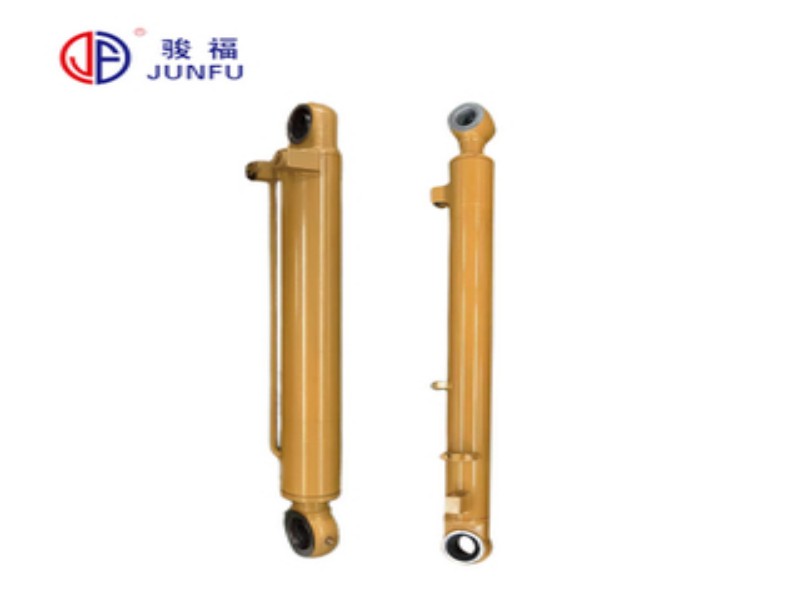
In daily operation, tipping cylinder issues usually show up before a full failure happens. The most obvious warning signs are oil leaks, slow lift speed, uneven movement, failure to reach full dump angle, and abnormal noises during extension or retraction. Binding, worn seals, damaged hoses, and loss of hydraulic power are also common problem sources. For mechanics and operators, these symptoms matter because they often signal that the cylinder is no longer moving with the smooth, controlled force the dump system needs for safe unloading.
Symptom in use | Likely concern to inspect |
Oil leakage | Worn seals, damaged fittings, or cracked hoses |
Slow or uneven lift | Low fluid, restricted flow, worn internal parts, or alignment issues |
Unusual noise or binding | Friction, contamination, or damaged moving parts |
Reduced lifting power | Pressure loss, air in the system, or component wear |
Incomplete dump angle | Stroke, load, pressure, or geometry-related problem |
Basic maintenance points that extend service life
Routine maintenance is what keeps a tipping cylinder reliable under repeated lifting cycles. The strongest maintenance priorities are consistent visual inspection, hydraulic fluid checks, hose and fitting checks, seal monitoring, lubrication, and pressure verification. These are not minor housekeeping steps. Dirty or low hydraulic fluid can damage internal surfaces, loose fittings can turn into leaks under load, and worn seals can quickly reduce lifting performance if they are ignored. Full extension and retraction should also be tested to confirm smooth motion, while unusual sounds may reveal early internal wear.
A practical maintenance rhythm should stay simple enough to follow in real work:
● before each use, inspect the cylinder body, rod, and connections for visible damage or corrosion
● weekly, check fluid condition, hose integrity, and overall operating smoothness
● monthly, inspect seals and O-rings, lubricate moving parts, and confirm system pressure
● after repairs or major service, perform a load test and document the results
Why early inspection helps prevent downtime
Early inspection reduces downtime because tipping cylinders rarely fail without leaving clues first. A small leak, slight drag in cylinder motion, or irregular lift speed may seem manageable for one more shift, but those minor issues often spread stress through the rest of the dump system. Regular inspections and recorded maintenance help prevent unexpected failures and costly repairs. Safe operation also depends on pre-use checks, especially for leaks, visible damage, and correct movement under load.
For operators, early inspection protects productivity. For mechanics, it creates a chance to replace seals, hoses, or fittings before the truck or trailer is taken out of service by a larger hydraulic failure.
Conclusion
A tipping cylinder does far more than lift a dump body. It supports smoother performance, better reliability, and lower long-term mechanical stress in dump trucks and trailers. Shandong junfu hydraulic technology Co.,Ltd. delivers tipping cylinder solutions built for stable lifting, durable service life, and practical maintenance value, helping operators and mechanics improve efficiency with confidence.
FAQ
Q: What does a tipping cylinder do in a dump truck or trailer?
A: A tipping cylinder converts hydraulic pressure into lift, raising the body for controlled unloading.
Q: How does tipping cylinder sizing affect dump performance?
A: Correct tipping cylinder sizing determines lift force, dump angle, stability, and full-load discharge efficiency.
Q: What problems can a worn tipping cylinder cause?
A: A worn tipping cylinder can cause slow lifting, leakage, uneven motion, and higher mechanical stress.
Q: When should a tipping cylinder be inspected?
A: A tipping cylinder should be inspected regularly for seal wear, hose damage, and reduced lifting performance.


