- All
- Product Name
- Product Keyword
- Product Model
- Product Summary
- Product Description
- Multi Field Search


Views: 0 Author: Site Editor Publish Time: 2025-11-28 Origin: Site


Hydraulic pumps are vital components in hydraulic systems, converting mechanical energy into hydraulic energy to power various industrial machinery. Whether in construction, automotive, agriculture, or aerospace, hydraulic pumps enable efficient and powerful operation of machines and equipment. This article focuses on the three main categories of hydraulic pumps: gear pumps, piston pumps, and vane pumps, exploring their features, advantages, and common applications.
A hydraulic pump is a mechanical device that converts mechanical energy into hydraulic energy, allowing for the movement of fluids to transfer power. It functions by drawing hydraulic fluid into the pump and then pressurizing it before discharging it into the system to perform work. Hydraulic pumps are essential in applications requiring high force or precise control over movement.
Hydraulic pumps come in a variety of designs, each tailored to specific applications based on the pressure, flow, and efficiency requirements. Understanding the different types of hydraulic pumps is crucial when choosing the right pump for an application, as each type offers distinct advantages depending on the task.
The three primary categories of hydraulic pumps—gear pumps, piston pumps, and vane pumps—serve different purposes and are designed to meet various pressure, flow, and efficiency needs. Each category has unique characteristics, making it important to select the appropriate type based on the application. Let’s explore each category in detail to understand where and why they are used.
Gear pumps are the most straightforward type of hydraulic pump. They work by using two meshing gears to draw hydraulic fluid into the pump and force it out under pressure. These pumps are typically used for lower pressure and flow systems but can still provide reliable performance in many applications.
Compact Design: Gear pumps are small and easy to integrate into machinery with limited space.
Simple Construction: With fewer moving parts, gear pumps are easy to maintain and operate.
Cost-Effective: Gear pumps are generally less expensive to manufacture and maintain compared to other hydraulic pump types.
Reliability: Their simple design ensures reliable performance over long periods.
Efficiency: Despite being simple, gear pumps provide a high level of efficiency for low to medium pressure applications.
Durability: They are designed to handle a variety of fluids, including oils and fuels.
Low Maintenance: With fewer moving parts, gear pumps require less maintenance and have a longer operational lifespan.
Application | Hydraulic Pump Type | Function |
Power Steering | Gear Pump | Provides fluid movement for steering systems in vehicles. |
Lubrication Systems | Gear Pump | Lubricates machinery by supplying oil under pressure. |
Small Machinery | Gear Pump | Powers small machines like conveyors and compressors. |
Automotive Systems | Gear Pump | Operates the hydraulic systems in cars and trucks. |
Gear pumps are widely used in automotive systems, lubrication circuits, and small machinery, offering a compact, reliable solution for low-pressure tasks.
Piston pumps use pistons inside a cylinder to pressurize the hydraulic fluid. As the piston moves, it creates suction, drawing fluid into the cylinder, and then expels it under high pressure when the piston moves in the opposite direction. Piston pumps are capable of handling much higher pressures and flows than gear or vane pumps, making them ideal for demanding applications.
Variable Displacement: Many piston pumps are capable of variable displacement, allowing for adjustable flow rates depending on the needs of the system.
High Pressure Capacity: Piston pumps are designed to operate in high-pressure environments and are ideal for heavy-duty applications.
Versatility: These pumps are often used in systems requiring precise flow control and high power.
High Efficiency: Piston pumps provide excellent efficiency in high-pressure applications, making them suitable for demanding systems.
Precision Flow Control: Piston pumps can be easily adjusted for different flow rates, giving them an edge in applications where precision is necessary.
High Durability: These pumps can withstand higher pressures and are more durable than other types, making them ideal for industrial applications.
Application | Hydraulic Pump Type | Function |
Excavators | Piston Pump | Powers the digging and lifting functions in construction equipment. |
Bulldozers | Piston Pump | Operates the moving and pushing actions of bulldozers. |
Mining Equipment | Piston Pump | Powers the machinery used for drilling, crushing, and hauling. |
Aerospace | Piston Pump | Operates hydraulic systems in aircraft for landing gear and control. |
Piston pumps are predominantly used in heavy-duty construction machinery, mining equipment, and aerospace applications where high pressure and precise control are required.
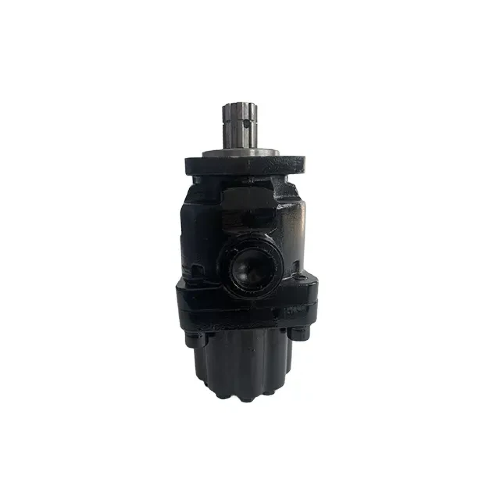
Vane pumps operate by using sliding vanes that move within a rotor. As the rotor turns, the vanes create chambers that increase and decrease in size, allowing fluid to be drawn in and expelled under pressure. Vane pumps are known for their smooth operation and consistent flow, making them suitable for medium-pressure applications.
Smooth Operation: Vane pumps provide smooth, constant flow, reducing the chances of pressure fluctuations in the system.
Quiet Performance: These pumps are generally quieter than gear pumps and piston pumps, which is an important feature in noise-sensitive environments.
Medium-Pressure Capability: Vane pumps are typically used in medium-pressure applications where smooth, reliable flow is needed.
Consistent Flow: Vane pumps are known for their steady, consistent flow, which is ideal for applications requiring constant pressure.
Quieter Operation: These pumps operate more quietly than gear pumps and piston pumps, which can be beneficial in certain environments.
Compact Size: Vane pumps are compact and can be integrated into machines with limited space, similar to gear pumps.
Application | Hydraulic Pump Type | Function |
Hydraulic Presses | Vane Pump | Powers the pressing and molding operations in factories. |
Mobile Equipment | Vane Pump | Provides fluid movement in mobile machinery such as forklifts. |
Material Handling Systems | Vane Pump | Operates systems that transport and handle materials. |
Industrial Machinery | Vane Pump | Drives hydraulic systems in various industrial machines. |
Vane pumps are commonly used in press machines, mobile equipment, and material handling systems, where consistent and medium-pressure performance is needed.
Pump Type | Pressure Capacity | Flow Capacity | Suitable For |
Gear Pump | Low to Medium Pressure | Low to Medium Flow | Simple, cost-effective applications |
Piston Pump | High Pressure | High Flow | Heavy-duty machinery, aerospace, and mining |
Vane Pump | Medium Pressure | Medium Flow | Presses, mobile equipment, industrial machinery |
Pump Type | Efficiency | Cost | Best Use |
Gear Pump | Moderate | Low to Moderate | Applications needing cost-effective, low-pressure operation |
Piston Pump | High | High | High-pressure, high-flow systems with precise control |
Vane Pump | Moderate | Moderate | Medium-pressure systems requiring consistent flow and quieter operation |
Pump Type | Maintenance Needs | Durability | Lifespan |
Gear Pump | Low | High | Long lifespan due to simple design |
Piston Pump | High | Very High | Suitable for extreme environments and heavy-duty use |
Vane Pump | Moderate | Moderate | Requires regular checks for vane wear and fluid seals |
Choosing the right hydraulic pump is crucial for ensuring optimal performance in your specific application. Gear pumps are ideal for cost-effective, low-pressure systems, providing reliable performance in simple machinery. For high-pressure systems and heavy-duty applications, piston pumps offer unmatched efficiency and precision. On the other hand, vane pumps provide a balanced solution for medium-pressure applications, delivering smooth, consistent flow and quieter operation.
At Shandong Junfu Hydraulic Technology Co., Ltd., we specialize in providing a wide range of high-quality hydraulic pumps tailored to meet your specific needs. Whether you're looking for reliable gear pumps, efficient piston pumps, or versatile vane pumps, our team is here to guide you in choosing the best solution for your system. With years of expertise in hydraulic technology, we are committed to delivering performance, reliability, and cost-effectiveness.
For more information or to discuss how our hydraulic pumps can support your operations, feel free to contact us. We're here to help you find the right solution for your business.
Q1: What is the main difference between gear, piston, and vane pumps?
A1: Gear pumps are used for low-pressure, cost-effective applications. Piston pumps are best for high-pressure systems that require precision and high flow. Vane pumps are ideal for medium-pressure systems that need smooth and consistent flow.
Q2: Which hydraulic pump is best for high-pressure applications?
A2: Piston pumps are the best for high-pressure applications due to their ability to handle higher pressures and provide variable displacement.
Q3: How do I choose between a gear, piston, or vane pump?
A3: Choose gear pumps for low-pressure and budget-friendly applications, piston pumps for high-pressure, high-flow systems, and vane pumps for medium-pressure systems requiring steady, smooth flow.
Q4: Are vane pumps more efficient than gear pumps?
A4: Vane pumps offer smoother and quieter operation compared to gear pumps, but gear pumps tend to be more efficient in simple, low-pressure applications.
Q5: What maintenance is required for hydraulic pumps?
A5: Regular maintenance includes checking for leaks, worn seals, and monitoring fluid levels. Piston pumps require more frequent maintenance due to their higher pressure and complex components.


