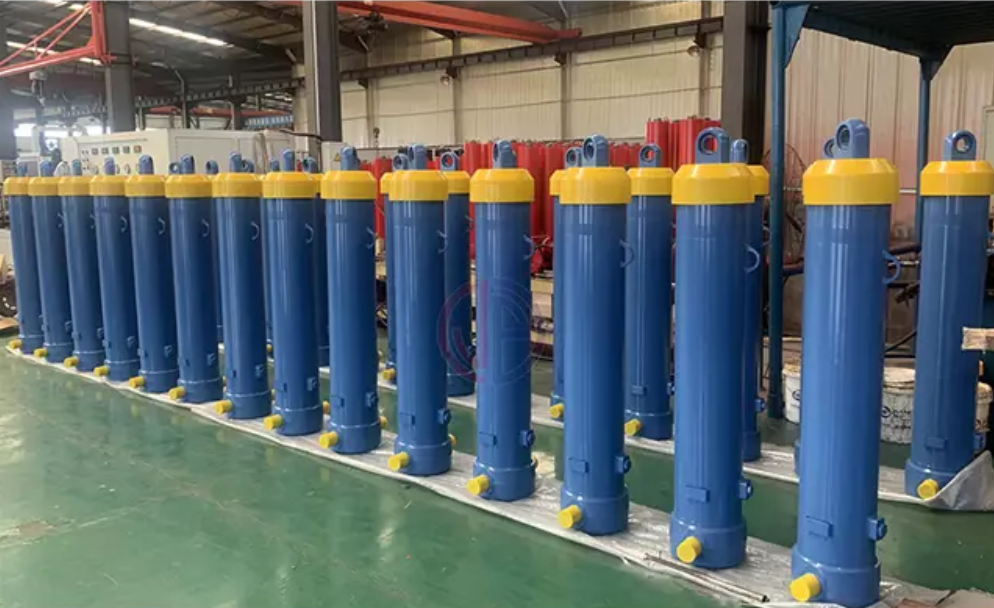
Choosing the wrong cylinder can make a simple tipping system costly and unreliable. A single-acting tipping cylinder offers simple lifting, while a double-acting design controls both directions. This guide compares their operation, cost, installation, performance, and ideal uses, helping you select the right option for your equipment.
Key Takeaways
●A single-actingtipping cylinder uses hydraulic pressure to raise the body. Gravity and the body weight usually return it.
●A double-acting cylinder uses hydraulic pressure for both extension and retraction. It provides more control in both directions.
●Single-acting designs usually need fewer hoses, valves, and fittings. This can reduce installation cost, weight, and maintenance work.
●Double-acting designs suit equipment needing powered retraction, predictable cycle times, or force in both directions.
●Conventional dump trucks and trailers often use single-acting telescopic cylinders because the raised body can return under gravity.
●Cylinder type alone does not determine performance. Payload, tipping geometry, stroke, mounting position, pump flow, working pressure, and duty cycle also matter.
●A complete tipping system should match the cylinder, pump, oil tank, valve, hoses, mounting brackets, and vehicle structure.
●Neither design is always better. The correct choice depends on how the body must lift, lower, and operate under real working conditions.
Single Acting vs Double Acting Tipping Cylinder: Key Differences
The main difference is how hydraulic oil controls movement. A single-acting cylinder normally has one working oil port. Pressurized oil enters the cylinder and extends its stages or piston. When the valve releases pressure, the load or gravity pushes the cylinder back.
A double-acting cylinder has two working ports. Oil enters one side to extend the cylinder. It enters the opposite side to retract it. This arrangement allows hydraulic force to control both directions.
Hydraulic Ports and Oil Flow
A single-acting system requires one main pressure line between the control valve and cylinder. During lowering, oil flows back through the same line. Its circuit can remain compact because the cylinder does not need a separate powered return line.
A double-acting system requires two working lines. The valve sends oil to either side of the piston while allowing oil from the opposite chamber to return. This operation needs a compatible directional valve and careful hose routing.
Extension and Retraction
Both cylinder types can create strong extension force. However, their return methods differ.
A single-acting tipping cylinderusually retracts through the weight of the empty body. The body must create enough downward force across the full movement range. Poor geometry, tight pivots, dirty stages, or restricted return flow can prevent complete retraction.
A double-acting cylinder retracts under hydraulic pressure. It does not depend entirely on body weight. This feature helps when the equipment angle, mechanism, or load cannot provide a steady gravity return.
Lowering Control
Single-acting systems can still provide controlled lowering through the valve and correct flow management. However, the downward force comes from the body rather than the cylinder.
Double-acting systems actively pull the cylinder inward. They can offer more predictable retraction speed and movement. This advantage matters when equipment needs repeatable cycles or controlled motion in both directions.
System Complexity
Single-acting systems usually contain fewer hydraulic connections. They may be easier to install, inspect, and repair. Fewer hoses and fittings can also reduce possible leakage points.
Double-acting systems need another hydraulic line and a more complex valve circuit. They may also require greater oil capacity because fluid must move between both working chambers.
Cost and Maintenance
A single-acting arrangement is often less expensive at the system level. The cylinder circuit is simpler, and fewer components must be purchased and installed.
A double-acting cylinder may cost more because it requires additional ports, seals, hoses, fittings, and control functions. However, the extra control can reduce operating delays in applications where gravity return is unreliable.
Comparison Area
Single-Acting Cylinder
Double-Acting Cylinder
Hydraulic ports
Usually one
Usually two
Powered movement
Extension only
Extension and retraction
Return method
Gravity or load weight
Hydraulic pressure
Circuit complexity
Lower
Higher
Hose requirements
Fewer
More
Retraction control
Depends on load and valve
Direct hydraulic control
Typical advantage
Simple and cost-effective
Controlled bidirectional motion
Common limitation
Requires reliable gravity return
Higher cost and system complexity
Tip: Compare the complete hydraulic circuit cost, not only the cylinder purchase price.
How a Single-Acting Tipping Cylinder Works
Single-acting cylinders are widely used in conventional tipping equipment. Their operating sequence matches the natural movement of many dump bodies.
Hydraulic Pressure Raises the Body
The power take-off or another drive source operates the hydraulic pump. The pump moves oil from the reservoir through the control valve. Pressurized oil then enters the cylinder.
As pressure rises, the cylinder extends and lifts the body around its rear or side pivot. A telescopic design can provide a long working stroke while keeping a shorter closed length. This feature suits vehicles with limited mounting space.
The required lifting force is highest near the beginning of the tipping cycle. At this point, the body angle is low, and the cylinder must overcome a large portion of the loaded body weight. Correct bore size, working pressure, and mounting geometry are therefore critical.
Gravity Returns the Cylinder
After unloading, the operator moves the control valve into the lowering position. Oil can return from the cylinder to the reservoir. The weight of the body then pushes the stages inward.
This arrangement works well when the body has enough weight to retract the cylinder smoothly. The hinges, pivots, and guides must move freely. A blocked return line or damaged cylinder stage can slow the lowering process.
Best Uses for Single-Acting Cylinders
A single-acting tipping cylinder is often suitable for rear-tipping trucks, dump trailers, agricultural trailers, and similar vehicles. These machines usually raise the body in one direction and use gravity for the return movement.
Front-end telescopic cylinders can provide long lifting strokes for larger bodies. Underbody cylinders can fit beneath the body of compact or lighter vehicles.
How a Double-Acting Tipping Cylinder Works
A double-acting cylinder uses hydraulic pressure on both sides of its piston. This changes the cylinder, valve, and oil circuit.
Hydraulic Force Controls Both Directions
During extension, the valve directs pressurized oil into the extension chamber. Oil from the opposite chamber returns to the reservoir.
During retraction, the valve reverses the flow. Pressurized oil enters the retract chamber and pulls the piston inward. The cylinder can therefore move even when gravity provides little help.
Additional Components Are Required
A double-acting system normally needs two hoses connected to the cylinder. It also needs a directional valve able to switch pressure and return flow between both ports.
The pump, reservoir, valve, and hoses must support the required flow. An undersized return path can create heat and back pressure. Poor hose routing can also expose lines to rubbing, crushing, or sharp bends.
When Powered Retraction Adds Value
Powered retraction is useful when the cylinder operates horizontally or at an unusual angle. It also helps mechanisms that require both pushing and pulling force.
It may suit industrial unloading platforms, compacting equipment, movable gates, or special tipping structures.
A double-acting cylinder should not be selected only because it appears more powerful. If gravity already provides a safe and reliable return, the extra circuit may add cost without improving the tipping process.
Performance Under Real Tipping Conditions
Catalog descriptions cannot show every working condition. Material behavior, vehicle angle, loading practice, and operator habits can change cylinder performance.
Tipping and Lowering Speed
Extension speed depends on pump flow and the amount of oil needed to fill the cylinder. A larger cylinder may provide more force, but it also requires more oil for each movement.
A single-acting cylinder can lower quickly when the body is heavy and the valve allows high return flow. However, uncontrolled lowering can create shock loads. The system must manage return flow correctly.
A double-acting cylinder can provide more consistent retraction. However, speed still depends on pump capacity, piston area, valve size, and hose diameter.
Uneven or Sticky Loads
Wet soil, clay, refuse, and agricultural materials may remain attached to the body during tipping. This can shift the center of gravity and create sudden movement after the material releases.
Neither cylinder type can correct unsafe loading. Operators should distribute material evenly and tip on firm, level ground. A powerful cylinder does not prevent vehicle rollover caused by poor stability.
Repeated Operating Cycles
Frequent cycles increase oil temperature and accelerate wear. Double-acting systems move pressurized oil during both extension and retraction, which may increase hydraulic demand.
Single-acting systems have simpler oil routing, but long telescopic stages still need clean oil, correct alignment, and effective sealing. Products designed for tipping duties often use hardened surfaces, improved guiding structures, protective dust components, and durable seals to support stable movement.
Installation and Hydraulic System Requirements
The acting type is only one part of cylinder selection. A suitable cylinder can still fail if the mounting geometry or hydraulic circuit is wrong.
Pump, Valve, and Reservoir Compatibility
The pump must provide enough pressure to lift the maximum load. It must also deliver suitable flow for the required cycle time.
A single-acting cylinder usually works through a tipping valve that controls raising, holding, and lowering. A double-acting cylinder needs a valve that directs flow to both ports.
The oil tank must hold enough usable fluid for full cylinder extension. It also needs space for oil expansion, air separation, and return flow. Selecting components separately can produce slow movement, overheating, or incomplete extension.
Front-End and Underbody Installation
A front-end telescopic cylinder is mounted near the front of the tipper body. It can provide a long stroke and a high tipping angle. It is commonly used when the vehicle carries larger loads or has a long body.
An underbody cylinder is installed beneath the body, often near the center. This layout can support compact installations and lighter tipping applications.
Mounting Alignment
The cylinder must follow its intended movement path without binding. Mounting pins should remain aligned, and brackets must support the expected forces.
Side loading can score moving surfaces, damage guides, and wear seals. It may also cause telescopic stages to extend unevenly. The body hinge, cylinder mount, and chassis structure must therefore be designed as one mechanical system.
Reliability, Maintenance, and Safety
Cylinder reliability depends on correct use as much as product construction. Routine checks can prevent small faults from becoming expensive failures.
Single-Acting System Checks
Slow retraction does not always mean the cylinder is defective. Inspect the return line, valve, pivots, mounting alignment, and body weight first.
Check exposed stages for dirt, corrosion, scoring, and impact damage. Oil around the seals may indicate wear or excessive side load. The cylinder should retract smoothly without sticking between stages.
Double-Acting System Checks
Inspect both hoses and all fittings. A damaged retract line can prevent the cylinder from returning. Internal seal leakage may also reduce movement force or cause drifting.
The directional valve should shift fully between positions. Pressure settings must remain within the cylinder and system limits. Excessive pressure can damage seals, fittings, brackets, and structural parts.
Safe Tipping Practices
Never work beneath a raised body supported only by hydraulic pressure. Use the correct mechanical body prop or approved support system.
Do not tip on soft, sloped, or uneven ground. Confirm that the load can discharge freely before raising the body. Operators should stop the cycle if the body leans, the cylinder jerks, or any stage extends unevenly.
Hydraulic cylinders should also be protected from contamination, overload, and side force. These conditions can damage seals and working surfaces or create unsafe movement.
Note: Hydraulic pressure moves the body, but it is not a permanent mechanical support.
Conclusion
A single-acting cylinder offers simple, efficient lifting when gravity provides a reliable return. A double-acting design adds powered retraction and greater movement control. Shandong junfu hydraulic technology Co.,Ltd.supplies front-end, underbody, and customized hydraulic solutions. Its durable materials, sealing systems, mounting options, and complete tipping kits help users build reliable systems for varied loads and vehicles.
FAQS
Q: What is a single-acting tipping cylinder?
A: A single-acting tipping cylinder uses pressure to lift and gravity to retract.
Q: How does a double-acting tipping cylinder work?
A: A double-acting tipping cylinder uses hydraulic pressure in both directions.
Q: Which cylinder costs less?
A: Single-acting systems usually cost less because they need fewer components.
Q: Why will my tipping cylinder not retract?
A: The tipping cylinder may have blocked flow, poor alignment, or damaged stages.
Q: Is double acting always better?
A: No. It adds control but also increases cost and circuit complexity.
Q: Which tipping cylinder suits dump trailers?
A: A single-acting tipping cylinder often suits trailers using gravity return.